Get Full Government Meeting Transcripts, Videos, & Alerts Forever!
Get email alerts on the Leadership Superintendent topic
No spam. Unsubscribe anytime.
Residents press Oyster River board to remove superintendent amid lawsuits and soaring legal bills
Summary
Multiple residents told the Oyster River Cooperative School District board that the superintendent should resign or be removed, citing a spike in legal spending and survey results showing low staff morale. Speakers urged the board to act quickly and to explain how taxpayer dollars are being spent.
Residents at the Oyster River Cooperative School District's May 20 meeting renewed calls for the district's superintendent to resign or be removed, saying legal costs and recent staff-survey results have eroded trust and strained the budget.
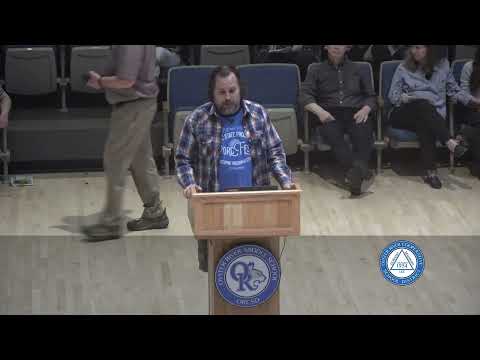
At the start of the meeting a public commenter urged the board to increase accessibility to constituents and to respond to a community survey that, the speaker said, shows the superintendent would be unable to lead effectively amid ongoing lawsuits. "I would urge him to resign. If he doesn't, I would urge the board to remove him," the commenter said.
Ben Couture of Durham gave specific figures the board can use to assess the budgetary impact. "The district budgets $70,000 per year for legal costs," he said. "Last year the district spent more than double that amount, $150,334. And this year, we're on track to double that spending again to over $300,000." Couture argued that the extra legal spending could have funded teacher raises or covered the tuition-equivalent of nine students.
Several other residents amplified those points. Colin Blake Butler said legal spending rose sharply after the district hired its current superintendent in July 2024 and cited a string of prior legal and administrative findings at the superintendent's previous positions, characterizing the pattern as a driver of the district's current legal liabilities. Butler said the board now faces a choice between budgeting to defend the superintendent or buying out the contract and hiring new leadership.
Board members acknowledged receipt of community concerns and said they take the input seriously. At the meeting the board also approved routine minutes and several consent items while public commenters urged the board for more substantive, timely responses to the concerns they have raised.
What happens next: the board ended the public portion of the meeting and voted to move into a non-public session under RSA 91-A:3 II(c), a statute permitting private discussion of certain personnel matters. The roll-call vote recorded all members present in favor of entering non-public session. The meeting record does not include any formal personnel action taken in public; any personnel recommendations or contract decisions would be conveyed in future public minutes or announcements when permitted by law.