Get Full Government Meeting Transcripts, Videos, & Alerts Forever!
Get email alerts on the Aurora Public Safety topic
No spam. Unsubscribe anytime.
Residents plead for urgent action as shootings and trafficking spill from Aurora into North Aurora neighborhoods
Summary
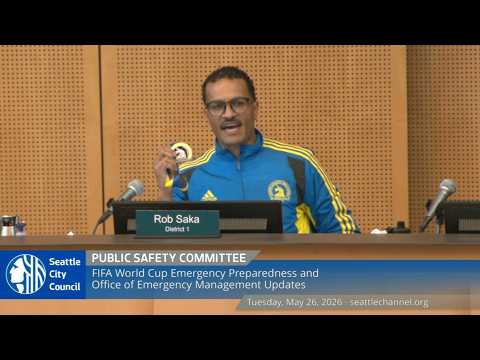
At a May 26 Seattle Public Safety Committee meeting, multiple North Aurora residents urged immediate enforcement of the SOAP ordinance, permanent street closures and more police and detective capacity after a recent surge of shootings they say is tied to organized prostitution and trafficking.
Residents from the North Aurora corridor told the Seattle Public Safety Committee on May 26 that recent, concentrated gunfire and what they described as organized sex‑trafficking are spilling into adjacent neighborhoods and endangering children and families.
Jake, a District 5 resident, said his block experienced multiple shootings in recent weeks and that SPD data he obtained “confirmed that over 60% of the shootings on my block are directly related to prostitution.” He told the council a bullet landed two feet above the window of his six‑week‑old baby and urged officials not to wait for the city’s strategic framework plan.
Other commenters described neighborhood fear and long‑term change. “It’s been a really long month,” said Maddie Porter, a parent who walks to the bus stop near Aurora. Lacey Tigerson, who has lived near the corridor for 14 years, said condom wrappers and other paraphernalia that once stayed on Aurora now appear in front of houses and near children.
Multiple speakers urged enforcement of SOAP, a city ordinance passed in September 2024 that residents said has not been fully used. “Please enforce SOAP. Start there,” Maddie Porter said. Several callers asked the council to direct Seattle City Attorney enforcement and to make temporary SDOT street closures near 97th–100th permanent to reduce trafficking corridors.
Volunteer and survivor‑services advocates asked the committee to pair enforcement with services. Herring Gardiner, who volunteers with a survivor support organization, warned that trafficking often involves very young victims and asked council members to coordinate anti‑trafficking funding ahead of the FIFA World Cup.
Council members acknowledged the callers’ concerns and emphasized the limits of the council’s authority on operational matters. Chair Robert Kettle thanked speakers and highlighted committee priorities: increasing SPD sworn staffing and detective capacity and leveraging the realtime crime center and CCTV as investigative tools. Councilmember Lin noted the council’s fiscal role, saying the council authorized and funded camera expansion with privacy protections but that activating cameras is a mayoral decision.
The committee did not take formal action at the meeting. Speakers called for near‑term mayoral and police‑department measures — enforcement of existing ordinances, allocation of overtime or targeted patrols for FIFA, and stabilization of investigative squads — and asked the mayor’s office and SPD for clear, public plans addressing Aurora before the World Cup begins.