Get Full Government Meeting Transcripts, Videos, & Alerts Forever!
Get email alerts on the Municipal Budget topic
No spam. Unsubscribe anytime.
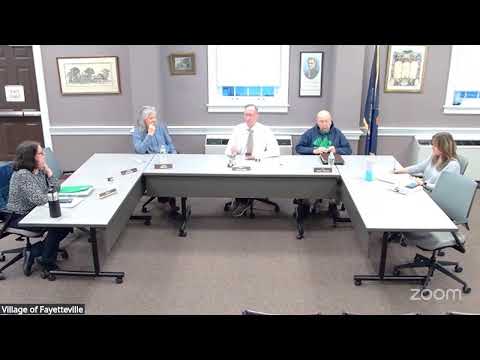
Fayetteville trustees continue public hearing on 2025–26 budget as residents warn of strain on fixed-income households
Summary
Fayetteville trustees continued a public hearing on the proposed $8.35 million 2025–26 village budget, which would raise $3,354,359 by levy (a 6.79% increase). Residents urged deeper savings, citing impacts on fixed-income homeowners; trustees pointed to new reserve accounts and specific cuts such as reducing flower pots.
The Fayetteville Board of Trustees continued a public hearing on the proposed 2025–26 village budget Tuesday, laying out an $8,352,274 spending plan and a tax levy to be raised of $3,354,359 — a 6.79% increase from the previous year — while officials said the village’s tax rate per assessed value will fall compared with last year.
At the start of the meeting the presiding official reviewed the budget process: five departmental workshops examined line items, and staff proposed two new reserves to smooth future costs — an employee benefits/accrued liability reserve for payouts when employees leave, and a village property repair reserve to address major building maintenance needs.
“Total budget is $8,352,274 … the amount to be raised by tax out of the $8,352 some odd thousand is $3,354,359 which is called the tax levy,” the presiding official said, explaining the levy and the mix of revenue, fund balance and taxes used to fund the budget.
Resident Bob Weber (167 Brookside) said the proposed levy increase will squeeze people on fixed incomes and urged trustees to “look deeper” for savings. “A lot of people are very dissatisfied,” Weber said, noting neighborhood residents on fixed incomes who he said might be forced to sell.
Trustees and staff responded with examples translating levy changes into household dollars. Using the board’s calculation, trustees said that, in the worked example presented at the hearing, the budget adjustments equate to about $0.42 in village tax per $100,000 of assessed value — a shorthand the board used to help residents estimate their change in village taxes. Officials walked residents through sample math for various assessed values.
The board outlined specific cost-saving measures reviewed during workshops. Those included reducing the number of decorative flower pots in the public right-of-way (from about 67 in recent years to roughly 32–35 on main streets this year), which officials said saves roughly $15,000, and seeking sponsorships or vendor partnerships for festivals and some event costs. Staff also described efforts to stagger equipment replacement costs and to apply for outside grants; officials said the village is applying for a $50,000 community development grant to help replace a senior-center boiler rather than drain the new repair reserve.
A resident who walks daily asked whether storm-drain and sidewalk work is covered in the DPW budget; trustees said DPW addresses catch basins and adjacent paving as needed, that several streets are scheduled for repaving this year, and asked the resident to provide specific locations so crews can prioritize repairs.
Board members also discussed personnel matters in public session: the DPW contacted a former employee, Andrew Como, about returning in a probationary role; trustees said Lori (village staff) could produce his prior personnel file and that a formal action on any hire would be on the agenda at the next regular meeting. The board did not take a hiring vote at this special meeting.
Trustees said the public hearing — opened at an 11 a.m. meeting last week and continued tonight — will close and the final budget vote is scheduled for the next regularly scheduled meeting a week from tonight at 6 p.m. The board invited residents to sign up for agenda notices and to use the livestream if they cannot attend in person.
Votes and formal motions recorded at the meeting were limited and procedural: trustees moved to close the public hearing and later moved to adjourn the special meeting; a formal vote on the budget and any personnel hires was scheduled for the next regular session.
Why it matters: The hearing framed how Fayetteville will fund core services — from DPW and public safety to cultural programming — and how those choices translate into household tax bills. Trustees emphasized long-term planning (new reserves, staged equipment replacement and grant-seeking) as ways to moderate future tax volatility, while residents urged continued scrutiny to protect fixed-income homeowners.
Next steps: The public hearing will close and the Board of Trustees is scheduled to vote on the 2025–26 budget at its next regular meeting, one week from tonight at 6 p.m.