Get Full Government Meeting Transcripts, Videos, & Alerts Forever!
Get email alerts on the Budget Priorities topic
No spam. Unsubscribe anytime.
Board weighs next‑priority requests: plate readers, comfort dog, stipends and a proposed project manager
Summary
During deliberations the board split over funding for license‑plate readers and a school comfort dog, agreed in principle to pursue a COPS grant for an additional officer, debated raising volunteer firefighter stipends to $2,000, and asked staff to produce proposals for a town/school project‑manager role to accelerate stalled capital projects; staff estimated a preliminary mill rate at about 3.66 mills.
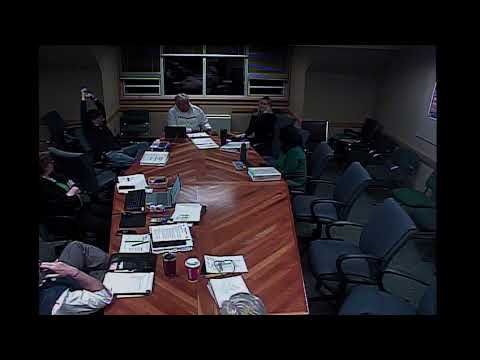
The Board of Finance spent the latter portion of its March 17 session weighing multiple next‑priority funding requests and larger structural proposals aimed at improving town project delivery.
Priority requests under discussion included a license‑plate‑reader system for public safety, a comfort dog program intended for school support, body cameras already included as an operating request, and a package of staffing and stipend proposals. Board members were split on the plate‑reader request: several voiced support for the equipment’s ability to help police track vehicles involved in crime, but most said installation should be conditional on strict data‑access controls and a local policy limiting external requests for stored data. In the absence of clear governance safeguards, the board deferred funding for the plate readers and suggested staff craft a data‑control policy before proceeding.
Members also discussed a comfort dog program whose upfront and recurring costs were described as modest but whose school‑buy‑in remained unresolved. Several members favored revisiting that request next year if the school system commits to shared funding; others said it is a desirable program but not an essential expense this budget cycle.
The board reaffirmed support for applying for Department of Justice COPS grant funding for an additional officer — the board agreed it cannot pre‑fund a position but will support a grant application that could cover a significant share of salary for multiple years if awarded.
On volunteer firefighter stipends, members debated raising the existing stipend from $1,500 to $2,000. Staff estimated the aggregate town cost at roughly $30,000 (not all volunteers qualify every year); members asked counsel to confirm legal permissibility and payroll/tax treatment before finalizing the change.
A recurring governance question dominated the final hour: whether the town should hire a dedicated project manager (potentially shared with the Board of Education) to accelerate delayed capital projects such as school roof work, field renovations and an anticipated police station. Proponents argued a single, accountable project manager would reduce delays, improve bid specifications and limit cost overruns; opponents requested a clearer job description, a cost‑sharing formula and demonstration that existing staff could not absorb the responsibilities. Members agreed to develop scenarios and project lists for further deliberation ahead of final votes.
Finance staff summarized capital totals and a preliminary mill‑rate estimate of about 3.66 mills, and the board instructed staff to prepare several budget scenarios for the upcoming deliberations and the March 31 public hearing.
No final votes were taken on the contested priorities; items were deferred pending additional policy work (plate‑reader data governance), legal review (stipend legality) and further discussions with the Board of Education (comfort dog and shared project‑manager costs).