Get Full Government Meeting Transcripts, Videos, & Alerts Forever!
Get email alerts on the Land Use Development topic
No spam. Unsubscribe anytime.
Killingly keeps Ryan Companies public hearing open as residents and reviewers press for more data on wetlands, aquifer and runoff
Summary
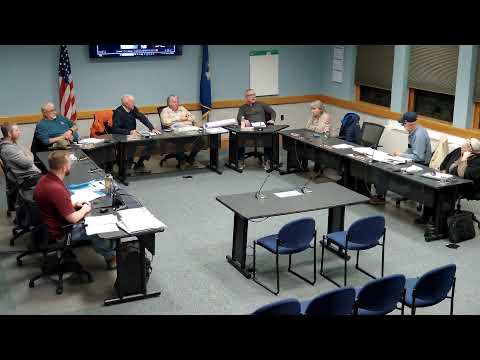
The Killingly Inland Wetlands & Watercourses Commission continued the public hearing on Ryan Companies’ proposed distribution center to May 11 after technical presentations from the applicant and its consultants and extensive public concerns about wetlands impacts, aquifer risk and firefighting-runoff contamination.
The Killingly Inland Wetlands & Watercourses Commission voted to continue the public hearing on Ryan Companies’ large distribution‑center proposal to its May 11 meeting after the applicant presented technical responses and residents raised extensive environmental and operational concerns.
The applicant’s team, represented by attorney Tom Cody and engineers from Langan and All Points, briefed the commission on changes since the March hearing and on responses they plan to submit to a third‑party peer review. Tim Andurko of Langan said the revised materials show the building footprint has been reduced by about 89,000 square feet and that impervious area and pavement were adjusted to shrink downstream flow and potentially reduce infrastructure size. “With the pavement reduction and the building footprint reduction, the new impervious coverage is 2 acres less than what we started,” Andurko said.
Dean Gustoson, a professional soil scientist with All Points, outlined the project’s wetland mitigation plan. He said the project proposes roughly 22,446 square feet of wetland impact, with proposed restoration of about 16,921 square feet and an added 15,000 square feet of wetland creation. “That is a total mitigation of 31,921 square feet versus the impact of 22,446 square feet — that’s a ratio of about 1.42 to 1,” Gustoson said, adding that including seven acres of wetlands preserved under a conservation easement would increase the effective mitigation ratio to about 2.1 to 1.
The applicant also described a multi‑step stormwater treatment train — hydrodynamic separators, underground detention, media ("jellyfish") filters and level spreaders — and a package sewage treatment system the applicant said would reduce nitrogen concentrations from typical influent levels (~65 mg/L) to roughly 10 mg/L before leach field discharge. The engineering team emphasized design features and operation-and-maintenance plans, including routine filter cleaning and vacuum‑truck maintenance and the state permit processes overseen by DEEP.
Third‑party reviewer Rick Hanavan (Time Bond) told the commission his team is still reviewing the applicant’s materials and expects to comment further after the applicant submits responses. Hanavan said the peer review has generated numerous questions, especially around wetlands delineation and stormwater conveyance.
Residents used the public‑comment portion of the hearing to press a broad set of technical and precautionary questions. Several speakers urged more baseline water testing in headwater areas and domestic wells, worried about dissolved contaminants (for example, chloride from roadway salt and PFAS compounds) that many stormwater devices do not remove, and asked the commission to require clearer long‑term monitoring and enforcement mechanisms. Charles Furland, a longtime resident, cited industry guidance on distribution‑center fires and firefighting runoff, saying public officials lack information about tenants’ storage and handling practices. “When a fire occurs, firefighting water and extinguishing agents can mix with these substances, creating a contaminated runoff,” he told the commission.
Chair Karina Tori and staff emphasized the procedural importance of keeping the hearing open while the applicant and peer reviewer exchange responses. The applicant consented to the extension. Jonathan, a town staffer, told residents that additional written comments will be accepted into the record and that materials submitted by the applicant and reviewer are available on the town website.
What’s next: The public hearing remains open; the applicant has said it will submit a comprehensive response to the peer review and town comments, and the commission scheduled a continuance to Monday, May 11. The commission’s decision will depend on the applicant’s written responses, any further third‑party review and the record of public comment.
Provenance: Topic introduction appears in the transcript when the public hearing was opened (SEG 552). Applicant technical presentations span multiple segments (beginning SEG 706). The public‑comment block begins at SEG 1434 and the continuance motion is recorded at SEG 2668–2671.
Speakers quoted or relied on in this article are drawn from the meeting transcript and include Tom Cody (attorney for Ryan Companies), Tim Andurko (engineer, Langan), Dean Gustoson (All Points), Rick Hanavan (Time Bond), and multiple residents including Charles Furland and Al Drain.