Get Full Government Meeting Transcripts, Videos, & Alerts Forever!
Get email alerts on the Housing Innovation District topic
No spam. Unsubscribe anytime.
Committee approves housing innovation district package — TIF district, permit fee relief, pilots and grants to spur east‑side housing
Summary
The committee approved a multi‑part package to create an east‑side TIF district, waive or reduce building permit fees for small housing projects, seed pilot home‑repair and modular housing efforts, and authorize grants for neighborhood improvements and recovery housing. City leaders say early pilots will begin this summer; some council members urged safeguards to ensure current residents benefit.
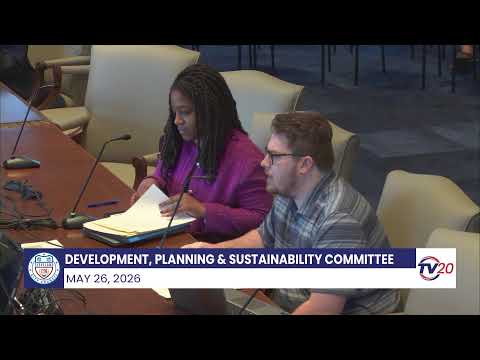
The Development, Planning and Sustainability committee voted on May 26 to advance a multi‑ordinance housing package intended to jumpstart housing and infrastructure investment on Cleveland’s near east side.
The package includes: Ordinance 615‑2026 to establish an east‑side Tax Increment Financing (TIF) district covering a roughly 1,500‑acre geography (split conceptually into a residential north and commercial/industrial south); Ordinance 622‑2026 to waive building‑permit fees for new one‑ to three‑family construction and reduce fees 50% for larger multifamily projects in the designated area; and Ordinance 675‑2026 to authorize a grant agreement with the Cuyahoga County Land Reutilization Corporation (the county land bank) to administer initial neighborhood improvement funds.
City leaders presented data showing over 2,800 vacant lots in the geography and argued coordinated investments — from permitting reforms and a pattern book of pre‑approved home designs to modular housing pilots and catalytic public infrastructure — could reverse decades of disinvestment. The administration said it will pilot roughly 20 new houses (both stick‑built and modular), pursue 10 home repairs, and deliver two storefront renovations with an initial $750,000 city contribution matched by philanthropic partners. “We’re trying to pull a multitude of resources into one geography,” the chief said, describing the effort as an integrated, cross‑departmental push.
Officials described how a TIF district would work: the current tax base remains intact while future increases in property value (the increment) could be captured and dedicated to street‑level infrastructure, demolition, environmental remediation, sewer/water connections and other public improvements in the district. Staff modeled modest growth scenarios (1–3%) and explained how captured increment could fund multi‑year neighborhood investments; they also noted substantial tax‑exempt parcels in the area today.
The committee also approved two discrete actions tied to neighborhood goals: a $500,000 grant (Ordinance 665‑2026) to the Northern Ohio Recovery Association to convert two duplexes (four units) at 5342 Standard Avenue into recovery and permanent housing, and Ordinance 661‑2026 to complete the previously authorized conveyance of the former Martin Luther King Jr. High School site (1651 East 71st Street) to a private developer planning a multifamily redevelopment.
Some council members pressed for clarity on timelines, whether captured TIF proceeds would divert resources from other wards, and how philanthropic partners will coordinate with community development corporations. Councilman Slife publicly cautioned that philanthropic prioritization without a citywide equity conversation risks leaving other neighborhoods behind; other members urged prompt action to turn vacant land into productive uses.
Next steps: the committee voted to approve the TIF and permit relief ordinances and other items; staff said initial pilot construction should start that summer and that more detailed financing, TIF monetization options and legal documents will return to council for approval as projects develop.