Get Full Government Meeting Transcripts, Videos, & Alerts Forever!
Get email alerts on the Building Codes topic
No spam. Unsubscribe anytime.
Buena Vista trustees reject countyproposed electric-preferred building code
Summary
After a public hearing with testimony from residents, utilities and county staff, the Buena Vista Board of Trustees voted to reject Ordinance 2026-11, a county-crafted "electric-preferred" building-code amendment. Trustees cited affordability and local control concerns in a roll-call vote that resulted in no yes votes recorded.
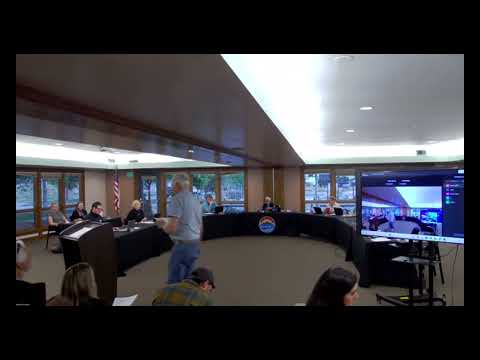
Buena Vista — May 26, 2026 — The Buena Vista Board of Trustees voted on May 26 to reject Ordinance 2026-11, a county-drafted amendment that would encourage or prefer all-electric construction in new buildings. After a public hearing with multiple speakers for and against the change, trustees declined to adopt the amendment by a roll-call vote.
The hearing included technical testimony and personal accounts from residents, energy providers and town officials. Alexander Buck of Atmos Energy told trustees the amendment would reduce ‘‘choice’’ for homeowners and offered several numerical claims to underscore his opposition: ‘‘$1,100. The amount BV residents will save each year heating their heating with natural gas compared to an all-electric home,’’ he said, and he cited other figures on payback and outage experience to argue potential costs to local households.
Representing the local electric cooperative, John Byer said utilities are pursuing deep carbon reductions and higher renewable penetration and encouraged a balanced approach: ‘‘The all-above approach works just fine for Sangre de Cristo Electric,’’ he said, noting local investments in residential solar incentives and battery programs.
Trustees opened the hearing with staff summaries of the county process and options. Town staff emphasized the town and county have an intergovernmental agreement for building-safety services and that jurisdictions can adopt different codes. Several trustees expressed concern about affordability, resiliency on cold nights, and the speed of the county's timeline; others said the state energy code is already progressive and local changes should not be more restrictive.
After deliberation the board moved to adopt Ordinance 2026-11 (a motion to adopt the county amendment). The roll call following the motion recorded the following votes against adoption: Trustee Hike (no), Trustee Rice (no), Trustee Row (no), Trustee Stern (no) and Trustee Swisser (no); the motion failed.
The hearing and vote do not change the county's code; they reflect the town's decision not to adopt the county-drafted amendment. Town staff noted the building-safety department must still manage differing code requirements if the county and some municipalities adopt divergent provisions. The board left open the option of further local discussion and possible future refinement of the town's code.
What happens next: the ordinance failed at the town level; the county has adopted its amendment. Town officials said they could invite county staff back for more technical briefings or pursue tailored tweaks locally, but no further town-level action on Ordinance 2026-11 was taken at the meeting.