Get Full Government Meeting Transcripts, Videos, & Alerts Forever!
Get email alerts on the Land Use Training topic
No spam. Unsubscribe anytime.
State ombudsman gives Hideout planning commissioners a primer on land-use law and the commission’s role
Summary
Rob Terry of the Office of the Property Rights Ombudsman gave required land-use training, reviewing the Land Use Development and Management Act, the difference between legislative and administrative actions, and best practices for general plans, ordinances and public engagement.
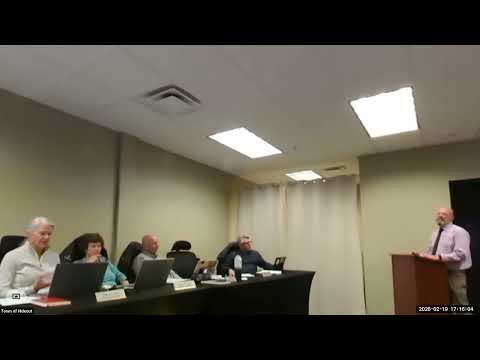
Rob Terry, land-use training director with Utah’s Office of the Property Rights Ombudsman, led a roughly hour-long training for Hideout’s Planning Commission on statutory requirements and local practice.
Terry explained that the Land Use Development and Management Act (referred to in the training as LAMA) is the state-level foundation for local planning, and stressed that the general plan’s purpose is to protect public health, safety and welfare while guiding long-range community vision. "The general plan is intended to be a living document," Terry said, urging commissioners to treat it as a compass rather than an immutable text.
A major focus of the session was the difference between legislative and administrative actions. Terry said legislative actions create or change laws and are typically the responsibility of the town council, while administrative actions apply existing ordinances to specific proposals. Recent state changes mean some subdivision approvals now are administrative, he noted, which narrows — but does not eliminate — the commission’s role.
Terry reviewed land-use tools and constraints: zoning and ordinances implement the general plan; design standards must avoid rules that effectively strip property rights; and master development agreements (MDAs) can modify local limits where already negotiated. He emphasized that ambiguous code language must be interpreted in favor of the private-property proposal.
Commissioners asked about common points of friction — parking, upzones, the design of retaining walls and ex parte contacts with applicants — and Terry recommended transparency and plain-language rules. He also pointed commissioners to the Land Use Academy of Utah for training modules and model documents.
The training closed with procedural reminders: commissioners should support decisions with substantial evidence in the record and disclose off-record contacts. Terry said the ombudsman’s office can issue advisory opinions to help resolve disputes without litigation.
Next steps: Terry provided to staff additional legislative citations and signaled he would provide specific bill numbers upon request. Commissioners were encouraged to complete required state training hours and to consult the office for technical questions.