Get Full Government Meeting Transcripts, Videos, & Alerts Forever!
Get email alerts on the Complete Streets topic
No spam. Unsubscribe anytime.
Health program coordinator outlines Complete Streets grant and what it would fund in Wolcott
Summary
Melissa Kiren, program coordinator for Active Healthy Lane (operating under Finger Lakes Community Action Program), described the New York State "Creating Healthy Schools and Communities" reimbursement grant, explained complete-streets concepts and said the program can reimburse small sidewalk repairs, bike racks, bus shelters, crosswalk signs and similar items after a partner agreement and walking audit.
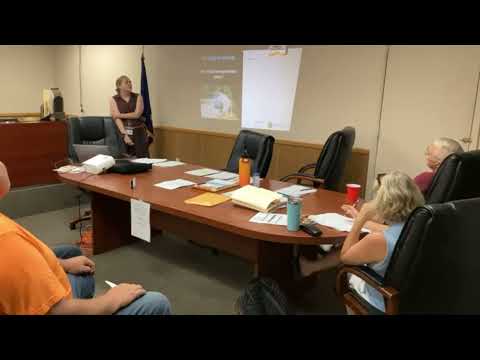
Melissa Kiren, program coordinator for Active Healthy Lane, presented the New York State "Creating Healthy Schools and Communities" grant to the village board and residents, describing how the program supports "complete streets" and safe-routes policies to make walking and biking safer and more accessible.
Kiren said the program operates through the Finger Lakes Community Action Program and began local work about a year ago. She described complete streets as "streets designed to be safe, comfortable and efficient for pedestrians, cyclists, transit riders and motorists," and explained they can include sidewalks, multi-use trails, bike lanes, accessible transit stops, median islands and crosswalk improvements. "Complete streets are also not just City or Suburban approaches — they can work in rural areas too," she said.
Kiren told the board the grant is reimbursement-based and cannot pay labor costs. "We are a reimbursement grant program that has to be paid for first and we cannot pay for labor at all in our grant," she said, adding the program helps with materials such as bike racks, bike-fix stations, crosswalk paint and small sidewalk replacements once the municipality signs a partnership agreement.
She described the program's typical support: conducting a walking (street) audit with community members, helping form a steering committee to sustain a long-term vision, and assisting with pop-up community engagement events. Kiren cited a recent project in Lyons where sidewalks were replaced near a school as an example of a safe-routes installation.
Board members and residents asked about funding limits, whether the program would write other grants and the five-year structure of the award. Kiren said the program receives an annual allotment each year of the five-year grant but cannot promise future funding and does not provide grant-writing support for other programs. "Sometimes we get funds for another year; it doesn't necessarily mean there will be funds for another year," she said.
Kiren offered to provide a list of approvable and non-approvable expenses and distributed brochures and business cards for follow-up. She encouraged the village to identify priorities for a walking audit and said adopting a complete-streets or safe-routes policy can increase the jurisdiction's competitiveness for other grants.
The presentation closed with an offer to partner on a walking audit and a reminder that the grant guidelines are publicly available through the New York State Department of Health.