Get Full Government Meeting Transcripts, Videos, & Alerts Forever!
Get email alerts on the Land Use Mbta Communities topic
No spam. Unsubscribe anytime.
Freetown amends MBTA Communities zoning language, adds business special‑permit review amid grant concerns
Summary
The Select Board approved changes to implement MBTA Communities Act requirements, adding special‑permit review for businesses in a mixed‑use zone to preserve local oversight; members warned the move could affect future design‑grant eligibility and routine state funding.
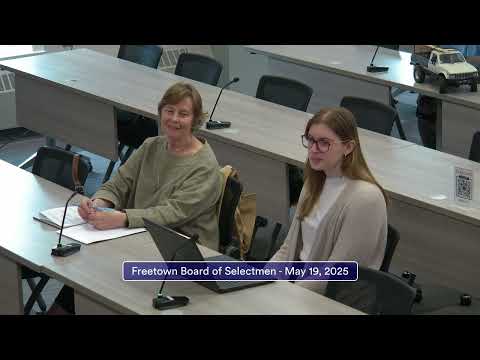
The Freetown Select Board on May 19 approved proposed changes to local zoning intended to comply with the MBTA Communities Act density requirements. The board’s changes keep housing by‑right to meet state density targets but add a requirement that businesses in the town’s mixed‑use zone obtain a special permit from the Planning Board.
Town planner Nancy described the work to craft the amendment on a tight schedule to meet state requirements and noted the amendment’s aim to preserve municipal review of business uses while still meeting the state’s housing‑unit targets. She acknowledged that housing must be allowed by‑right under the statute to count toward the town’s compliance.
Board members said they supported protecting local review of businesses to avoid unwanted or incompatible commercial uses and emphasized the amendment’s limited scope. Several members raised concerns that compliance (or noncompliance) with the MBTA Communities Act could affect the town’s eligibility for certain state design grants or incentive funding. One member said the loss of design‑grant opportunities could equate to roughly $100,000 per year in recurring grant support and could make it harder to secure planning dollars needed to reach shovel‑ready status for larger projects.
The board voted unanimously to approve the proposed zoning amendments with the special‑permit language for business uses in the mixed‑use zone. Members asked staff to monitor state grant programs and to pursue available appeal or reconsideration processes if needed.
The board’s action is aimed at meeting state mandates while preserving local land‑use oversight; staff cautioned the community that some state funding incentives are structured to favor jurisdictions that fully meet the MBTA Communities Act benchmarks.