Get Full Government Meeting Transcripts, Videos, & Alerts Forever!
Get email alerts on the Fuel Breaks topic
No spam. Unsubscribe anytime.
Paradise Council Directs Staff to Draft Tougher Fuel‑Break Rules, With Case‑by‑Case Flexibility
Summary
Council asked staff to return with an ordinance raising perimeter fuel‑break requirements from 30 to 50 feet and to codify best practices for larger parcels while including provisions for case‑by‑case evaluations for steep or inaccessible lots.
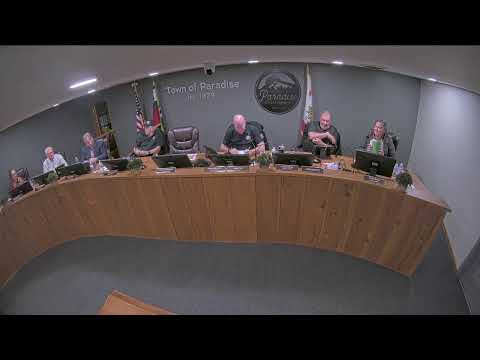
The Paradise Town Council gave staff direction Nov. 12 to draft municipal code changes to strengthen defensible‑space (fuel‑break) requirements on larger parcels, aiming to reduce wildfire risk across the foothill community.
Community Development Director Tony Lindsay presented a package recommended by an ad hoc council committee that would increase the required perimeter fuel break from 30 feet to 50 feet for most parcels and make additional interior bisecting fuel breaks a best practice (or requirement for very large parcels). Lindsay said the California fire code and best practice guidance support widening fuel breaks to improve lateral fire separation and firefighter access. He also presented cost estimates: increasing a 30‑ft perimeter to 50 ft could raise clearing costs roughly 30% for the perimeter, and intersecting cuts on a 5‑acre parcel could raise maintenance costs an estimated 60%.
Paradise Fire representatives supported the change but and urged flexibility. Chief Gaddy told the council the measures “will slow the spread” and that case‑by‑case assessments are necessary where steep slopes, ravines or downed trees make certain measures impractical. Several council members urged staff to include language that preserves discretion for on‑site inspections and documented variance processes for very large or inaccessible parcels.
Contractors and residents at the meeting said prescribed burns and controlled burning could substantially reduce costs compared with mechanical clearing; a contractor, John Rya, said permitted controlled burns are often a third the price of mechanical work if managed by qualified burn professionals.
Council direction was procedural: staff should prepare draft ordinance language that mandates a 50‑ft perimeter increase, treats bisecting/intersecting cuts as best practices or phased requirements, and creates a case‑by‑case evaluation process for parcels where the standard cannot be practically met. The ordinance will return to council after staff works with fire prevention staff to define the required documentation and variance pathway.
Next steps: staff will draft the ordinance and an implementation and outreach plan that includes cost information and guidance for property owners on options (contractors, prescribed burn programs and potential grant resources).