Get Full Government Meeting Transcripts, Videos, & Alerts Forever!
Get email alerts on the Data Centers topic
No spam. Unsubscribe anytime.
Commissioners press for tighter data-center controls amid concerns over water, noise and height
Summary
Nash County staff proposed adding data centers to the UDO with siting limits (GI-only, special-use review, separation distances, maximum height and public-utility connection). Commissioners worried about groundwater use, noise and fire response and asked staff and the county attorney to draft more restrictive language and run a legal feasibility check.
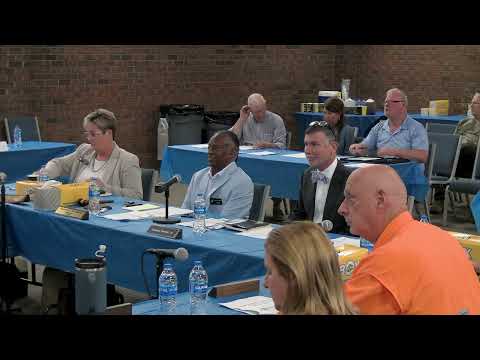
A contentious portion of the May 27 joint meeting centered on a proposed new use category for data centers and a set of strict controls staff suggested to limit where those facilities could be located in Nash County.
The proposed code language presented by Withers Ravenel would include:
- Limiting data centers to the countyGI (general industrial) zoning district and requiring a quasi-judicial special-use permit for approval.
- Separation standards described in the draft: roughly 500 feet from residences and 100 feet from roadways, a maximum building height of about 75 feet, required screening and a prohibition on relying on ground water and septic systems (connection to public water, sewer and power required).
- Additional design controls such as buffering and maximum impervious coverage and a required demonstration that utility systems can support the facility.
How boards reacted: Multiple commissioners expressed strong reservations about water consumption, nighttime noise/hum, fire-department capacity, and the visual scale of tall buildings near neighborhoods. One commissioner urged maximizing legal restrictiveness: "make them as restrictive as we can be legally," arguing distance and height limits should err on the conservative side until counsel advises otherwise.
Staff response: Adam Culpepper and planning staff said the recommended standards reflected economic-development input and a model used elsewhere; they suggested the GI-only plus special-use framework would reduce the number of candidate sites. They agreed to return with more restrictive language where feasible and to coordinate closely with the county attorney to avoid statutory conflicts.
What remains unresolved: State law limits local controls in some domains and could constrain outright prohibitions; the county must balance economic development and community protection. Commissioners asked staff to return with legal analysis of enforceability, practical separation distances, and any impacts to utility providers.
Next steps: Culpepper said staff will prepare revised ordinance language and a legal feasibility memo and present it after the June public-input sessions. If the board wants, the ordinance language will be tightened further before any planning-board public hearing.
Ending: The boards did not adopt new data-center rules at the meeting; they directed staff and counsel to draft stronger siting standards and to return with technical and legal analysis prior to public hearings.