Get Full Government Meeting Transcripts, Videos, & Alerts Forever!
Get email alerts on the Udo Revision topic
No spam. Unsubscribe anytime.
Nash County boards review broad rewrite of Unified Development Ordinance with safety, housing and tech limits under review
Summary
County planning staff and consultant Withers Ravenel proposed extensive updates to Nash CountyUnified Development Ordinance: larger road setbacks, tighter driveway and lot-width rules tied to NCDOT standards, new ADU rules, conservation subdivision options, and specific restrictions for solar decommissioning and data centers. Boards asked staff and legal to tighten several items and to hold public meetings in June.
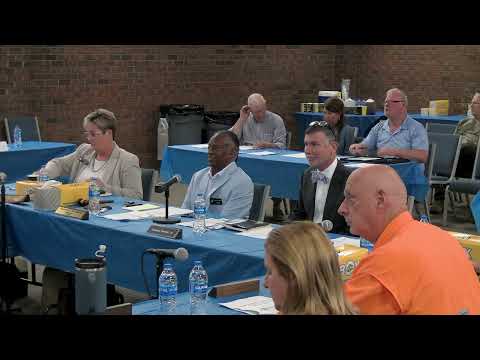
Adam Culpepper, planning director for consultant Withers Ravenel, walked the Nash County Planning Board and the Board of Commissioners through a recommended rewrite of the countyUnified Development Ordinance, the single regulatory document that sets zoning, subdivision and land-development standards in the unincorporated county.
Culpepper said the countybegan the project about a year ago and has held five steering-committee meetings. He described the approach as a reorganization and modernization of the 1998 ordinance rather than a wholesale rewrite: clearer graphics, a simplified permitted-use table, and consolidated accessory and temporary-use standards to reduce confusion for citizens and staff.
The presentation laid out a set of policy recommendations the steering committee approved for board consideration. Major proposals include:
- Increased front-yard setbacks tied to NCDOT functional class, with a tiered approach that would double setbacks on certain higher-class roads and raise them by 50% on others to push new homes farther from high-speed traffic; the stated goal is improved safety and livability.
- Aligning lot widths and driveway-separation requirements with NCDOT standards based on average annual daily traffic (AADT). Staff described a formula that would keep 100-foot lot widths on low-volume roads but substantially widen lots along busier corridors to increase driveway spacing.
- Removal of the ordinancewaiver used historically to permit shared driveways; instead the steering committee recommended using the quasi-judicial variance procedure through the board of adjustment.
- Clear prohibition and definition of irregular "foot" and flag lots that have produced unusable remnant land in prior decades; staff proposed defining the lot types with images and disallowing them as a permitted lot form.
- A new accessory-dwelling-unit (ADU) policy that would allow detached and attached ADUs with limits (minimum ~300 sq ft, maximum ~50% of the principal structure) and placement/parking standards tied to septic and water availability. Staff said ADUs can help aging households and provide rental options in the county.
- Clarified standards for duplexes, and a steering-committee recommendation to allow triplexes and quadplexes where duplexes are permitted, while acknowledging sewer availability will limit where they are feasible.
- A conservation-subdivision option that lets developers cluster the same number of homes on a smaller footprint in exchange for preserving a specified minimum acreage in a recorded conservation or agricultural easement.
- Solar-farm decommissioning requirements that, under the steering-committee approach, would require removal of all aboveground and subsurface equipment and an approved decommissioning plan with any solar-farm application; staff said the proposal would apply that requirement regardless of the statebond threshold so small projects also carry a removal obligation.
Culpepper closed by urging a careful drafting timetable: "The only thing worse than an old ordinance is a hastily adopted ordinance," he told the boards, urging thorough review before any final adoption.
Why it matters: The draft aims to reduce ad-hoc negotiations during rezonings by putting predictable, mandatory standards in the ordinance (landscape buffers, streetscape standards, stub-road formulae and utility-connection triggers). That is intended to speed reviews, limit last-minute concessions, and give developers and citizens clearer expectations.
Whatcomes next: Commissioners and planning-board members endorsed most clarity and formatting improvements but asked staff and the county attorney for further work on several policy areas—chiefly data-center restrictions, pavement width for new subdivision streets (see separate article on the access/24-ft debate), and public-utility funding/extension details. Staff said it would hold at least two public input events in June (an evening session plus a daytime "drop-in" before the planning-board hearing) before formal planning-board and county public hearings.
Ending: The joint meeting closed with direction for staff to return with revised ordinance language and feasibility checks from legal and utilities staff; a separate public meeting on the UDO rewrite is planned for June.