Get Full Government Meeting Transcripts, Videos, & Alerts Forever!
Get email alerts on the School Consolidation topic
No spam. Unsubscribe anytime.
Poudre School District board adopts consolidation policy and directs CPC to prepare fall recommendation
Summary
The Poudre School District Board approved new policy and regulation (FCB/FCBR) governing school closure and consolidation processes and voted 5-2 to authorize the Comprehensive Planning Committee to develop a fall recommendation after a summer of action-team work and community engagement.
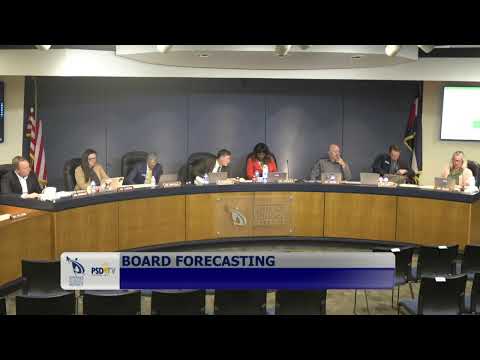
Poudre School District R-1's Board of Education on May 26 approved a new policy and regulation to guide school closure, consolidation and facility use and authorized the district's Comprehensive Planning Committee (CPC) to move into Phase Three and prepare a recommendation for the fall.
The board voted 6-1 to adopt Policy FCB and its implementing regulation FCBR, documents that lay out the criteria and public process the district will follow when considering school reassignments or consolidations. After nearly three hours of discussion about timing, outreach and equity, the board then voted 5-2 to direct the CPC to start action-team work over the summer intended to produce a formal recommendation by the October meeting cycle.
Why it matters: The district faces long-term enrollment declines and building underuse; the board and CPC say policy FCB is intended to create a structured, data-driven and community-centered way to decide whether and how to change school assignments. The policy describes criteria that balance fiscal stewardship, educational quality and equity, and the regulation establishes a recommendation timeline that anchors decision-making to the fall calendar.
What the CPC will do: Board and staff described an action-team model with ten workstreams that will be convened beginning in June. Teams include Building Communities Together (transition and social-emotional supports), Supporting Families (registration/records and communication), Continuity of Programming (IEP/early childhood/activities), Utilization Approaches for Buildings, HR & Employee Processes, Records/Finance/School Codes, Facility Needs, Safety/Traffic & Transportation, Communications & Events, and Scenario Development (CPC members). The teams will produce project plans, scenario-level impact analyses and mitigation strategies for the schools most likely to be affected.
Community engagement and timing: Board members and CPC leads agreed on a staged approach in which the CPC will aim to identify likely scenarios in mid-September, provide an initial recommendation and publish the analysis at least seven calendar days before the public board meeting, then allow roughly a month of focused engagement with the most-impacted communities before a final board vote. Several directors said they would seek regular updates and specific checkpoints throughout the summer; others pressed for a firmer anchor date so families and staff can plan.
Board division and safeguards: The board debate highlighted tradeoffs between urgency and thoroughness. Directors who supported the October anchor argued it would reduce prolonged uncertainty for families and enable staffing and budgeting to proceed; directors urging more time cited the need for deeper review of scoring and mitigation plans and warned against the public whiplash seen in prior processes. Staff said the CPC will bring evidence of adherence to the policy criteria and will stop the timeline if the work cannot be completed with fidelity.
What happens next: The CPC meets June 8 to approve work plans for the action teams. Staff and the CPC will report monthly to the board during the summer; CPC and staff intend to present a formal recommendation and supporting impact analysis in the October meeting cycle and seek a board decision thereafter.
Board action and votes: The board adopted FCB and FCBR (6-1 each) and authorized CPC Phase Three (5-2). President Jessica Zamora presided; roll-call tallies for the policy votes were recorded in the meeting minutes. The board and staff emphasized that the policy adoption is a framework; specific school names or closures will appear only in a future recommendation after the action teams complete analysis and after direct outreach with affected school communities.
Looking ahead: The CPC is charged with balancing quantitative measures (enrollment/utilization, facility condition, transportation) and qualitative impacts (school culture, student supports, equity). Staff said the recommendation will include mitigation plans for transitions, and that the board will have multiple opportunities to weigh in before any final vote.