Get Full Government Meeting Transcripts, Videos, & Alerts Forever!
Get email alerts on the Construction Moratorium topic
No spam. Unsubscribe anytime.
Council debates pause on high-density construction, defers decision for staff follow-up
Summary
Councilors discussed a proposed construction moratorium focused on high-density residential development, sought legal and departmental analysis of infrastructure impacts, and voted unanimously to defer action two weeks for staff briefings and traffic/power studies.
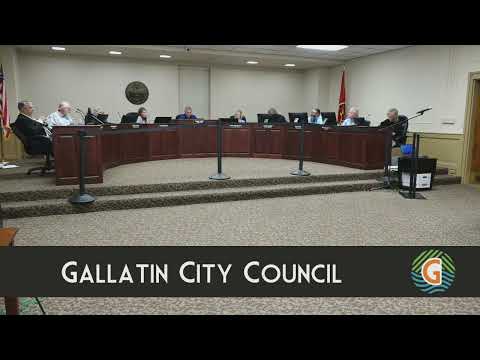
The Gallatin City Council Committee spent more than an hour May 12 debating whether to impose a temporary pause on high-density residential construction, ultimately voting to delay any formal moratorium for two weeks so department heads and legal staff can produce a factual basis for action.
Councilman Chivous, who framed the discussion as focused on new apartment projects rather than all construction, warned that a broad moratorium could halt projects already approved and stressed the need to define what “high density” means. “If we do a construction moratorium, we cannot do just a new construction. We have to stop even the ones who are already approved and not construct yet,” he said, urging clarity on intent and scope.
A staff speaker advising the council on legal requirements told members that state law permits moratoria but requires three elements: a reasonable scope and duration, a legitimate government interest such as infrastructure planning, and an adequate factual nexus tying the pause to the identified planning or infrastructure problem. “What we can’t do is have a moratorium just to frustrate development,” the staff speaker said.
Council members cited concerns about existing approvals (roughly 10,000 units previously approved in staff counts), uncertain utility timing on the north side, traffic, and public-safety staffing needs. Councilman Arrington said a moratorium would only be useful if the council used the pause to do concentrated work: “That’s when real work on our end has to begin,” he said.
Several members noted jurisdictional consequences shown in staff memos: for example, a recent moratorium narrowly focused on high density in another nearby city reportedly led to the loss of planned retail investment. Council members asked city engineers, fire, police and planning staff to prepare targeted memos describing what would change under a moratorium and what problems could be remedied in a defined pause.
After discussion, Councilman Alexander moved to defer consideration for two weeks to allow those department-head consultations; the motion passed unanimously.
Next steps: staff will return in two weeks with written analyses from public works, planning, codes, police and fire, plus the city attorney’s legal justification, to allow the council to consider a narrowly tailored moratorium (for example limited to specified zones or to defined high-density project types) or alternative regulatory tools.