Get Full Government Meeting Transcripts, Videos, & Alerts Forever!
Get email alerts on the Public Health topic
No spam. Unsubscribe anytime.
Jackson County environmental health director outlines virtual septic pilot, warns of regionalization
Summary
Elizabeth Townsen told the Jackson County Board of Supervisors that permit revenue is about $40,000 year-to-date, the county will pilot DNR-approved virtual septic inspections, and state public-health regionalization could shift control of some funding by 2027–28.
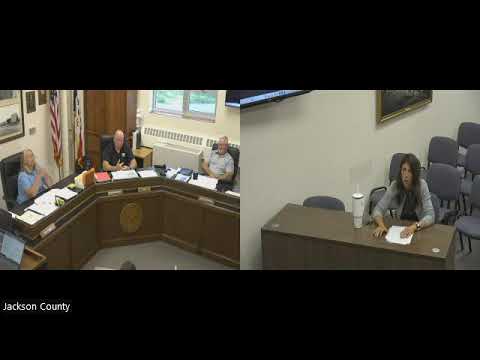
Elizabeth Townsen, the county’s environmental health director, told the Jackson County Board of Supervisors on May 26 that her office has collected roughly $40,000 in permit revenue so far this fiscal year and is launching several procedural changes and pilot projects.
Townsen said the county’s soil-evaluation program has been eased by a new, smaller machine and that staff completed 34 time-of-transfer septic reviews this year. “We’ve brought in close to $40,000,” she said. She described a new DNR-approved pilot that will let contractors complete part of a septic inspection through a web link while county sanitarians perform a site check: “We got approval from the DNR to do our virtual septic inspections and so we did go ahead and purchase ... the true pick,” she said, describing how contractors receive a link and answer questions before county staff perform a follow-up inspection.
Townsen also told the board the Iowa DNR contacted Jackson County after tests in the Mississippi River showed the presence of a persistent contaminant (referred to in the transcript as a “forever chemical”). The DNR has applied for a grant that would purchase treatment systems — such as reverse-osmosis units Townsen estimated at about $2,000 each — for eligible private-well owners and reimburse them under the grant. She said eligibility will be set by the DNR, that the county would need pre‑approval before testing or treating wells, and that it was not yet clear whether the private-well funds would cover those reimbursements.
Townsen raised a broader concern about statewide public‑health regionalization. She said the state plans to designate lead entities and shift some funding decisions to larger counties beginning in 2027, and warned that “we will lose control over any funding that we receive from the state.” Townsen said local boards of health will remain but that the change could add responsibilities without commensurate local funding.
Townsen also reported that the county issued 23 well permits (generating about $8,000 in fees, with $25 per permit remitted to the Iowa DNR), completed commercial septic-tank-cleaner inspections (with about $3,000 in related reimbursements for the year), and assisted the DNR and Army Corps on easement and septic issues for Mississippi-front properties; she said one case remained unresolved. She urged board members to stay engaged as the region’s public-health structure is reshaped and said she would report additional details as they become available.
The board took no formal action on the regionalization plan at the meeting; Townsen asked the supervisors to be kept informed as the state writes implementation details.