Get Full Government Meeting Transcripts, Videos, & Alerts Forever!
Get email alerts on the Homeless Services topic
No spam. Unsubscribe anytime.
Select Board advances homeless-shelter and camping ordinance to town meeting after residents seek clarity on definitions
Summary
The board approved sending a new homeless-shelter and public-camping ordinance to the town-meeting warrant. The draft requires licensed shelters with inspections, staffing and sanitation standards and prohibits unauthorized camping on municipal property; residents asked for clearer definitions of "adequate shelter," "temporary" and "nuisance."
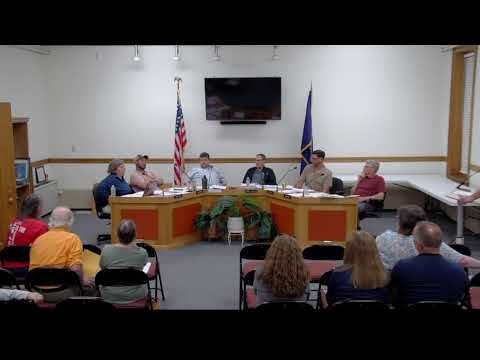
The Skowhegan Select Board voted May 26 to forward a newly drafted homeless-shelter and camping ordinance to the town-meeting warrant after a public hearing in which residents and board members pressed for clearer definitions of several terms.
Town planning staff described the draft as a licensing framework: shelters would need an annual license from the select board, submit floor plans and sanitation plans, conduct background checks for staff and volunteers, and meet staffing and safety standards, including at least one staff member on site when guests are present. The draft also sets minimum sanitation ratios — one toilet per 10 occupants, one sink per 10 occupants and one shower per 15 occupants — and gives the town authority to suspend or revoke a license for unsafe conditions or repeated violations.
Brian, who summarized the ordinance for the meeting, said the proposal also prohibits sleeping, camping or habitation on municipal property unless specifically authorized and gives enforcement agents the authority to order vacating and to remove encampments from public land. "Encampment abatement" language mirrors provisions used in other local ordinances, he told the board.
Several residents and board members raised questions. Gail and other attendees asked what the draft means by "adequate shelter" and how the town would assess whether such a shelter is available before restricting camping on municipal property. Garrett and Amber asked how "temporary" or "nuisance" would be defined and suggested that some language could leave too much discretion to enforcement officers. Brian acknowledged the concerns and said some terms were carried over from an earlier "controlled-substances" ordinance; he suggested further public engagement through the planning board if voters or officials seek changes.
The Select Board voted to send the draft ordinance to the town-meeting warrant for voter consideration; the board noted that adoption or modification would occur at that meeting.