Get Full Government Meeting Transcripts, Videos, & Alerts Forever!
Get email alerts on the City Finance Audit topic
No spam. Unsubscribe anytime.
Auditors give Baltimore a clean opinion but flag seven material weaknesses and a wastewater debt‑coverage failure
Summary
City auditors issued an unmodified opinion on Baltimore’s FY2025 financial statements but noted seven material weaknesses — many recurring — and a new material weakness in debt accounting after the wastewater fund failed to meet bond covenant coverage; officials tied part of the shortfall to elevated bio‑solids processing costs and outlined corrective actions.
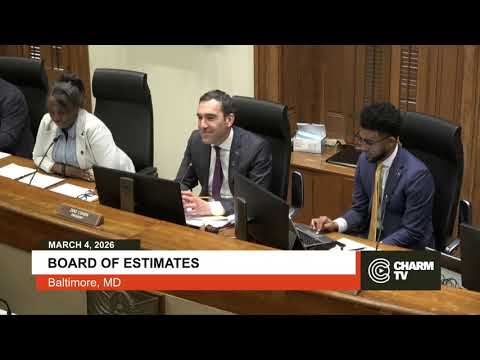
Auditors presented Baltimore’s annual comprehensive financial report and the single audit for the year ended June 30, 2025, to the Board of Estimates on March 4, issuing an unmodified (clean) opinion on the city’s financial statements while identifying seven material weaknesses and several program‑level compliance issues.
City Auditor Josh Pash and external engagement partner Bill Seymour said the unmodified opinion means the statements were reasonably free of material misstatement. At the same time, auditors reported seven material weaknesses in internal controls — six carryovers from prior years (financial reporting, cash and cash equivalents, grant accounting, water/wastewater billing, fixed assets, information technology security) and one new finding: debt accounting and compliance tied to the wastewater utility fund’s failure to meet debt service coverage requirements.
The single‑audit team tested 13 major federal programs (about 80% of federal expenditures) and issued qualified opinions on four programs, citing deficiencies in sub‑recipient monitoring and federal reporting. Auditors identified significant deficiencies related to payroll charged to federal grants, incomplete reporting back to federal agencies, and inadequate documentation supporting certain costs.
Board members and the mayor pressed auditors and administration officials on the wastewater fund shortfall and whether customers will face additional rate increases. Auditors said FY2025 revenue and expenses for the wastewater fund were out of balance and that, historically, rate increases have been used to restore coverage. Director of Public Works Matthew Garbark and other officials told the board one key driver of higher costs was bio‑solids processing: drying equipment intermittently nonfunctional and alternative processing forced by contractor Synagro led to higher, unbudgeted expenses (including out‑of‑state landfill disposal), which worsened the debt service coverage ratio and prompted a downgrade of the utilities’ bond rating by S&P.
Administration leaders described a series of corrective steps: improving monthly reconciliations; hiring specialized staff in grants and accounting; drafting standard operating procedures for month‑end closeouts, grant reconciliation, capital closeouts and debt compliance monitoring; and weekly DPW‑finance coordination to restore utility coverage. They emphasized they would not sacrifice Clean Water Act compliance and said they have plans to increase collections and contain costs. Auditors said they saw progress and that the city met the reporting deadlines for FY2025 audits for the first time in recent years.
Board members expressed urgency about implementing controls and accountability measures, and the mayor and administration committed to follow‑through with written procedures and timelines; the board noted the audit and took the report. Officials said they will report progress in future audit cycles and that some corrective actions are expected to be implemented in FY2026 and FY2027.