Get Full Government Meeting Transcripts, Videos, & Alerts Forever!
Get email alerts on the Land Conservation topic
No spam. Unsubscribe anytime.
Steuart family traces 300-year farm history and aims to conserve remaining acreage
Summary
At a Stratham Heritage Commission program, a Steuart family presenter traced the farm’s lineage from 17th‑century Wigan holdings through 20th‑century dairy and poultry eras and said the family is working with Southeast Land Trust to conserve the roughly 90 acres not already covered by a 1981 state conservation easement.
The presenter, a member of the Steuart family, told the Stratham Heritage Commission on Monday night that the Steuart Farm has been shaped by successive owners since the 17th century and that the family is actively working to conserve the last unconserved portion of the property with the Southeast Land Trust.
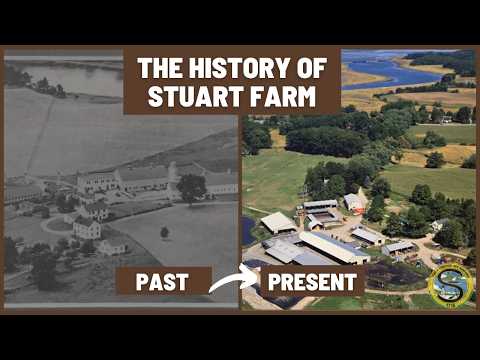
The talk—part visual program, part family history—outlined ownership from early Wigan settlers through the Wickham trotter‑breeding era, the Baker dairy expansion and auction in 1944, the Christie poultry boom and bust, and the Steuart family’s 1961 purchase of the property. The presenter said the family paid $48,000 for 270 acres in 1961 and later sold a conservation easement to the State Department of Agriculture in 1981 that helped keep the farm intact for future generations.
Why it matters: The presenter emphasized that the farm’s land and river frontage are regionally significant and that conserving the remaining acreage would protect about a mile of Squamscott River frontage and extensive Milbrook frontage. "We have every intention of keeping the farm and staying put," the presenter said, and added that the family is "working with Southeast Land Trust to conserve the last 90 acres that was not done in 1981." The presenter asked the community for patience as the family completes surveys and conservation negotiations.
Details from the talk: The presentation described early mills and roads tied to the Wigan family, the construction of large barns and wharves under later owners, and the farm’s evolution from subsistence plots to large‑scale dairy and poultry operations. The presenter cited historical maps and postcards, and referenced artists John Samuel Blunt and Childe Hassam for early visual records. On the farm’s more recent history, the presenter said the family milked up to about 240 cows and at one point shipped roughly 4,000 gallons of milk every other day; they also described modernizations including new barns and silo systems in the 2000s.
Conservation status and next steps: The presenter stated that roughly 170 acres are already conserved and that the family is aiming to secure conservation for the remaining roughly 90 acres, which include woodland and marsh along the river and brook. "It's 270 in its current form," the presenter said. "170 already is. And we're aiming to get the other another 91 done." The presenter also described a survey flagging on the ground as part of the conservation process and noted that the family sold its milking herd the previous September and is transitioning operations while retaining the property.
Partnerships and environmental work: The presenter described a man‑made stormwater pond built about 25–30 years ago in partnership with state agencies to reduce sediment and nutrient runoff into Milbrook and Great Bay, and noted UNH students and graduate researchers have worked on water‑quality monitoring at the farm. The presenter credited public‑private partnerships for enabling infrastructure projects that would have been hard for a family farm to fund alone.
Public access and outreach: The family has hosted educational field days, UNH and USDA trainings, school visits and occasional public workshops, though the presenter said the farm remains a private family operation and future event plans will depend on future generations. When asked about public events, the presenter said the family allows artists and visitors who ask for permission and has hosted limited workshops and school field trips.
What happens next: The presenter said the conservation process is underway with survey work and collaboration with Southeast Land Trust and that there is no plan for housing development on conserved land. The presenter closed by taking questions from the audience about house locations on the property, the status of pasture, and the technical work on stormwater and water‑quality monitoring.
The program was part of the Stratham Heritage Commission’s annual public series and concluded with audience questions and remarks. The presenter encouraged community engagement and indicated the family will provide updates as the conservation project moves forward.