Get Full Government Meeting Transcripts, Videos, & Alerts Forever!
Get email alerts on the Open Meetings Brown Act topic
No spam. Unsubscribe anytime.
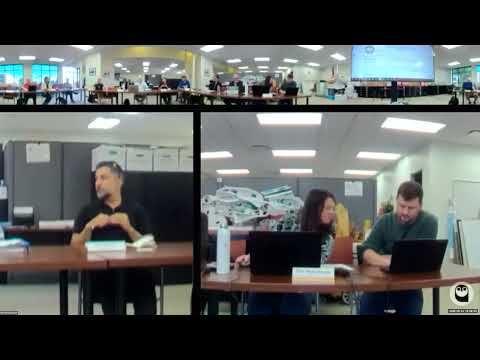
District counsel tells 7‑Eleven committee Brown Act sharply limits member communications
Summary
At the May 14 meeting, district legal counsel outlined Brown Act rules for the West Contra Costa Unified School District 7‑Eleven Committee, warning that serial contacts, group texts or social‑media coordination about committee business can create an unlawful "collective concurrence." Counsel recommended workshops or agendaized meetings for substantive catch‑ups and described teleconferencing and public‑records implications.
Phil Henderson, legal counsel to West Contra Costa Unified School District, told the 7‑Eleven Committee on May 14 that the Brown Act requires most committee deliberations to occur in public and cautioned members against informal exchanges that could form a de facto majority.
"Think of it as developing a collective concurrence," Henderson said, explaining that private emails, group texts or a string of one‑on‑one conversations can, together, create an unlawful meeting if they advance a committee decision. He urged members to use agendaized workshops or public meetings when they want to discuss substantive matters about surplus properties.
Committee members pressed for concrete examples. Henderson said mere factual exchanges (for example, asking staff for public records) are less risky, but they can become problematic if participants start expressing views or advancing strategy. He singled out the daisy‑chain pattern — member A talks to B, B talks to C, and so on — and warned that even likes or comments on social media tied to committee business can contribute toward prohibited coordination.
On teleconferencing, Henderson described the practical steps the district takes when a member attends remotely — posting participation information in the agenda, coordinating with staff in advance and commonly using roll‑call voting so the record shows how each member voted. He also told members that personal devices could be subject to public records requests if they contain committee business, though he said district staff rarely seize phones outright.
Public commenters and some members said the legal restrictions felt restrictive. Don Gosy, a longtime participant, urged the district to provide clearer onboarding so new members can catch up without accidentally triggering a violation. Henderson responded that a properly noticed workshop would allow the committee to revisit past work openly without legal risk.
The briefing closed with Henderson noting remedies for Brown Act violations, including the common cure of repeating an action in open session, and with the committee agreeing to schedule further agendaized meetings and public hearings as required by statute.
The committee discussed the Brown Act at length and will return to process questions in future agenda items.