Get Full Government Meeting Transcripts, Videos, & Alerts Forever!
Get email alerts on the Local Budget topic
No spam. Unsubscribe anytime.
Monroe hears proposed 2026 budget; consultant warns general fund reserve could fall to 3.95%
Summary
A Baker Tilly representative presented Monroe's proposed 2026 budget Sept. 4, projecting $280,000 in operating receipts versus $422,306 in expenditures and an ending general fund balance of $16,665 (3.95% operating balance), well below DLG guidance. Councilors asked for comparisons to 2025 and directed staff to provide follow-up information.
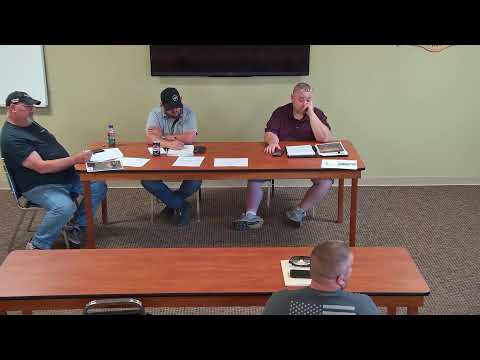
A Baker Tilly market manager walked Monroe Town Council members through the proposed 2026 budget at a Sept. 4 public hearing, saying the town's draft Form 1 projects $280,000 in operating receipts against $422,306 in operating disbursements and an illustrative ending general fund balance of $16,665.
"We like to see that around 15% or higher," the Baker Tilly representative said, noting the town's projected operating-balance percentage of 3.95% falls short of Department of Local Government Finance guidance. The presenter added that Baker Tilly often recommends higher reserves (up to 50% as a six-month target) to ensure stability between property-tax settlements.
The presentation laid out revenue assumptions that include $150,000 in property tax (the presenter said the town may be limited to 4% growth in levy authority), a certified local income-tax distribution of $76,745, and smaller intergovernmental receipts. The consultant also flagged a legislative risk: a state-level property-tax reform (referred to in the presentation as the "SEA revenue loss" from Senate Bill 1) and said Monroe's illustrative exposure in the packet was roughly $8,300 under that worst-case assumption.
Councilors were shown fund-by-fund cash-flow pages and a breakdown of how property-tax and local-income-tax revenues are currently programmed: the presentation's charts allocate roughly 44% of property-tax-supported spending to streets, 39% to town operations, 10% to public safety and 7% to economic development in the town's 2026 summary.
A councilor asked for a side-by-side comparison with the 2025 budget; the presenter said that comparison could be provided after the meeting. Council suspended the hearing portion to resume regular business; staff and the presenter said the budget would be before the council for final action following required public-notice steps. There was no recorded formal adoption of the 2026 budget in this session.
Why it matters: the low projected reserve increases the town's sensitivity to revenue shortfalls or unexpected expenses, councilors and the presenter said. Options discussed to shore up reserves included reexamining service-fee structures (including a possible stormwater fee), revisiting professional-services budgets, or reallocating small levies among funds.
Next steps: staff will circulate the detailed Form 1 and a budget-to-actual comparison for 2025, respond to questions about the legislative "SEA" estimate and other assumptions, and bring the budget back for the council's formal action after public-notice requirements are met.