Get Full Government Meeting Transcripts, Videos, & Alerts Forever!
Get email alerts on the Land Use topic
No spam. Unsubscribe anytime.
Commissioners defend planning commissionstance on windmill SDO amid accusations of overreach
Summary
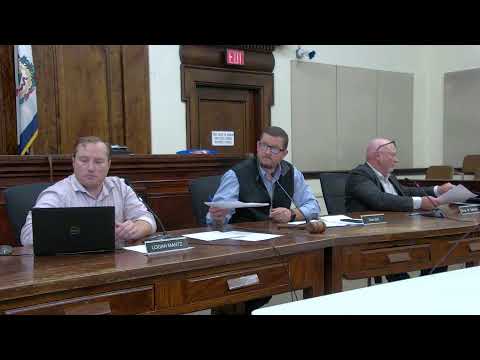
Commissioner Ralph Egllinger and Commissioner Logan Mance sparred over a proposed special development ordinance (SDO) governing wind energy near Capen Springs and Farm, with Egllinger arguing the SDO targeted one landowner and would exceed reasonable local authority while Mance defended the draft as researched and legally defensible.
Commissioner Egllinger delivered a detailed statement explaining why the planning commission and the county commission declined to expand Hampshire County's special development ordinance (SDO) in ways that would effectively block a proposed wind project at Capen Springs and Farm. Egllinger said the project "was breaking no laws" under current state standards and warned that adding overly restrictive SDO language would amount to "picking on one family" and risk an unconstitutional ordinance that would cost taxpayers in legal fees.
Egllinger told the commission the relevant test is reasonableness: he cited an official opinion from the West Virginia Attorney General and said an SDO may set reasonable conditions for development but "is not a document that can be used to tell people they can't do a development project." He argued that the SDO language suggested by some opponents had the practical effect of disqualifying nearly every parcel in the county unless owners aggregated very large contiguous acreage, a restriction he said would amount to de facto zoning the county has not adopted.
Commissioner Logan Mance responded that the AG opinion had been misrepresented in some meetings and defended the SDO drafter's approach. Mance said the ordinance contained setbacks and a deliberate carve-out that limited how county boundary lines could be used to measure required buffers, and he stressed that the county had documented findings and looked to comparable Appalachian ordinances when drafting the standards to withstand judicial review. "We did our research," he said, adding the SDO was intended to be "strict and reasonable."
Both commissioners acknowledged the broader absence of comprehensive local zoning across most of the state and the tension that creates when large industrial renewable-energy projects arrive in unzoned rural counties. Commissioners discussed the practical tradeoffs between allowing legally compliant projects to proceed and adopting local protections for neighbors and environmental resources; neither side said the commission had adopted a final new rule during the meeting.
The discussion concluded without a change in policy at this session; commissioners said the matter sparked strong public interest and will continue to inform future planning and legal review work.
The exchange underscores a key governance question for Hampshire County: how to balance property rights and legal constraints with constituent concerns about large-scale development. Commissioners said they will continue to rely on planning staff, external legal review and public input before any substantive ordinance change.