Get Full Government Meeting Transcripts, Videos, & Alerts Forever!
Get email alerts on the Pay Plan topic
No spam. Unsubscribe anytime.
Metro HR outlines FY2027 pay‑plan changes, recommends 1.7% across‑the‑board increase and living‑wage raises
Summary
Metro Human Resources told the Budget & Finance Committee it recommends a modest 1.7% across‑the‑board increase for FY2027 (paired with a 2% merit pool), continuation of last year’s market adjustments, and targeted entry‑level raises to move minimums to a living‑wage level for some pay schedules.
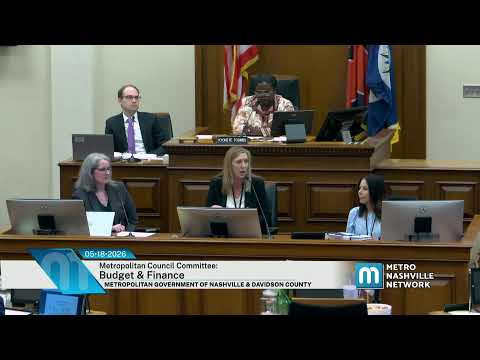
Metro Human Resources presented its FY2027 pay‑plan recommendations to the Budget & Finance Committee, saying the year will be largely “maintenance” after major market adjustments last year.
Leslie, who leads the city’s compensation work, told the committee HR will recommend across‑the‑board grade increases of 1.7% paired with an existing 2% budgeted merit pool so the total targeted pay increase for employees aligns with market indicators at about 3.7%. She said the 1.7% figure comes from a blend of the Employment Cost Index and salary‑budget survey projections.
HR staff described a strategic shift implemented last year that aligned range midpoints closer to the 25th market percentile, which resulted in pay‑range increases of around 8–9% and employee adjustments mostly in the 4–10% range, with an average near 7%. Leslie said the change was intended to make Metro more competitive for hiring while preserving fiscal sustainability.
The presentation included a living‑wage update. HR said the minimum hourly rate used in pay‑plan calculations will move from $21.66 to $22.48 using a three‑year blended MIT living‑wage metric recommended by Mercer, the compensation consultant. To meet that target, HR plans to upgrade entry‑level administrative support positions to start at $22.50 and entry‑level trades and labor classifications to start at $23.35.
HR also outlined several targeted classification changes for FY2027, including grade adjustments for emergency communications, police field‑training classifications, police aviation incentives for sworn pilots, and upgrades in fire investigations, behavioral health counseling and fleet maintenance. The office said worksheets showing the individual changes will be posted to the HR SharePoint site and included with the pay‑plan legislation expected this week; an ordinance adding new classifications (BL 2026‑1379) was noted as filed for first reading.
Committee members asked about methodology and timing. Councilwoman Porterfield asked why HR uses a three‑year average for the living‑wage metric rather than the current year’s single‑year figure; Leslie said Mercer recommended the multi‑year approach as a best practice to avoid volatile year‑to‑year swings, though she acknowledged the council could choose a different method with fiscal implications. Councilmembers praised the multi‑year progress raising employee pay over the last decade.
Questions about payroll system problems also arose. HR said payroll operations are technically under other departments but that HR is partnering with ITS, Finance and vendor technical teams (Oracle and Argonaut) to address remaining issues; HR staff said payroll problems are trending downward as fixes and workflows are implemented.
The presentation was framed as preparatory to upcoming pay‑plan legislation; HR emphasized that final amounts will be subject to Council and mayoral budget decisions. The committee took no formal vote on the pay‑plan resolutions at this meeting; the chair noted three pay‑plan resolutions covering general employees, police & fire, and health will be filed imminently and reviewed as part of the budget process.