Get Full Government Meeting Transcripts, Videos, & Alerts Forever!
Get email alerts on the Literacy topic
No spam. Unsubscribe anytime.
East Ramapo Central School District launches K–8 literacy initiative focused on science of reading
Summary
An agency official announced a districtwide strategic mission to bring high‑quality, science‑of‑reading instruction to every K–8 classroom in the East Ramapo Central School District (Spring Valley), highlighting bilingual materials, teacher training and partner-designed curriculum units.
An agency official for the East Ramapo Central School District (Spring Valley) announced a districtwide strategic mission to provide high‑quality reading instruction to every kindergarten through eighth‑grade classroom.
The official said the effort centers on the science of reading and listed five core instructional components: phonemic awareness, phonics, fluency, vocabulary and comprehension. Presenter (S1) framed the work as foundational, saying, “Leer es la base de todo lo que sucede en el aula.”
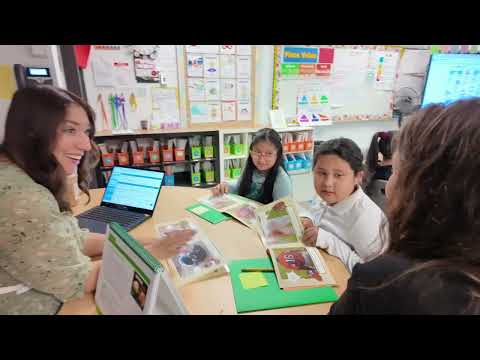
District leaders and staff emphasized that the initiative will include culturally relevant materials and bilingual texts so students in Spanish‑English programs see themselves reflected in classroom books. Presenter (S2) described K–8 implementation that includes leveled texts to allow each child to progress “a un ritmo que le funcione.”
The rollout, the agency official said, pairs classroom instruction with professional learning: coordinators and principals will work alongside teachers to learn and implement new strategies, and training will extend to building leaders so schools can sustain the work. Presenter (S2) added that some teachers are already reporting students reading multiple levels above prior benchmarks.
Staff member (S5) offered a classroom example of shifting student confidence: students who were previously reluctant to speak are now volunteering to read aloud. The transcript also includes an example Presenter (S1) cited about individual student progress; the phrasing in the transcript is inconsistent about grade labels and is reported here as stated rather than clarified by district staff.
District leaders described partner‑developed thematic units that integrate science and social studies with targeted texts and said the district will continue to deepen literacy work within the core curriculum next year. No formal votes, motions or funding amounts were stated in the transcript.
The district did not specify timelines, budgets or measures for districtwide assessment in the provided remarks; officials described implementation and training as ongoing.