Get Full Government Meeting Transcripts, Videos, & Alerts Forever!
Get email alerts on the Water Quality topic
No spam. Unsubscribe anytime.
Alexandria council reviews extra water tests; officials say distribution samples were negative amid resident concerns
Summary
City officials presented extra distribution tests showing negative results across sampled public sites; a public commenter pressed for yes-or-no answers on chlorine levels and a resident alleged household chloroform and E. coli positives, prompting officials to stress certified sampling procedures and follow-up.
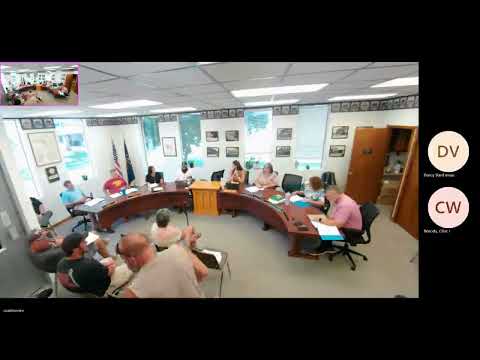
Alexandria — City leaders reviewed additional water-quality tests at a July 21 public working meeting and said distribution samples taken at schools, businesses and municipal sites were negative for bacteria, while at least one resident alleged private-sample results showing high chloroform and E. coli.
Council materials and presenters listed samples collected July 2 at the Alexandrian Care Center, the wastewater treatment plant, Emery Lee building, City Hall, the Alexandria Utility Office and a residence at 608 West Jackson Street; officials said those samples were negative. Additional samples taken July 9 and July 15 — including at the Alexandria Fire Department, Alexandria High School cafeteria, Casey’s, Save On Liquor, Subway and Alexandria Intermediate School — were reported as satisfactory by city staff.
Clint, the IDM representative invited to the meeting, explained how chlorine treatment and residual measurements work. “So chlorine is the method of treatment for the water system,” he said, describing the difference between free and total residuals and how daily injection-site readings and distribution residuals are logged and reviewed.
Clint and city staff described reasons a household might show low chlorine residuals that do not reflect a systemwide disinfection failure: line breaks or low pressure in the distribution system, unused or stagnant household plumbing, home water softeners, or improper sampling technique. Officials emphasized that when a positive bacteriological sample occurs, the municipality takes a repeat sample and follows state procedures, and that certified labs and correct sampling methods (for example, disinfecting and running the faucet then delivering the sample on ice to a certified lab) are required for presence/absence testing.
The city also explained post-detection procedures: a repeat sample is sought within 24 hours, a level-two assessment is triggered if E. coli is confirmed, violation letters are issued as required, and a drop in distribution pressure below 20 PSI or a main break commonly triggers a boil-water advisory.
During public comment, James Peters pressed Clint and city staff for simple yes-or-no answers about chlorine logs and whether particular residual readings are ‘‘acceptable’’ under federal or state law. Peters opened by asking, “Can you please confirm the email receipt of the chlorine logs I requested yesterday?” and repeatedly sought binary answers; staff replied that regulatory answers can be nuanced and that follow-up would be offered after the meeting.
A separate resident interrupted to assert she had results from HML showing ‘‘over 200 of chloroform’’ and high E. coli readings for her household and said a nearby neighbor also tested positive. Officials responded by restating HML’s sampling procedures and saying that proper disinfection of the faucet, running the sample, immediate refrigeration or ice during transport, and use of certified labs affect reliability. City staff urged residents to report concerns to municipal operators, who will investigate whether sampling procedures were followed or whether distribution problems exist.
The council voted at the meeting’s start to suspend the regular rules and to move public comment to the end of the agenda so the IDM representative could present; the motions carried (tally not specified in the record). Council members thanked staff for extra testing and encouraged residents with concerns to contact the mayor and the board of works, which oversees utilities.
Next steps: IDM and city utility staff said they will continue reviewing the daily residual logs and are available to meet individually with residents; officials said the board of works handles utility oversight, and staff will pursue follow-up investigations if certified lab results confirm contamination.