Get Full Government Meeting Transcripts, Videos, & Alerts Forever!
Get email alerts on the Education Policy topic
No spam. Unsubscribe anytime.
District outlines midyear goals: MTSS expansion, inclusion project and preschool quality efforts
Summary
Denellum administration presented midyear progress on four district goals — academic success (MTSS and literacy alignment), school climate and inclusion, operational efficiency, and community engagement — and described grant funding supporting those initiatives.
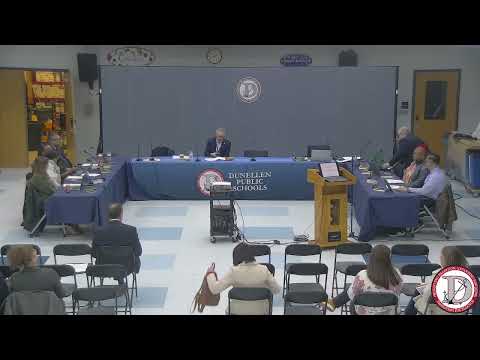
District leaders presented a midyear update on the Denellum School District’s strategic goals during the Jan. 6 board meeting, describing work intended to align classroom instruction and support services with measurable targets.
Superintendent Mr. Ross summarized four broad district goals — academic success and data use, student wellness and school climate, operational efficiency, and community engagement — and described the process by which district goals cascade into specific measurable impacts and strategic actions.
Megan Japkin, director of curriculum and instruction, described multi‑tiered systems of support (MTSS) implemented at Faber (year three) and rolling out at the middle and high schools. She emphasized K–8 literacy alignment, increased PLC capacity, use of diagnostic tools (I‑Ready and LinkIt) and an in‑progress data‑warehousing effort to centralize student profiles for intervention planning. Japkin said federal Title I/II/III funds and competitive grants are supporting many of the initiatives.
Dr. Tyra Santanello, director of special services, outlined school climate work — added counselors and bilingual counseling, a wellness specialist program, positive behavior supports (buoy bucks; kindness tickets; high‑school reward systems) and the district’s selection for the New Jersey Inclusion Project, a three‑year professional‑learning and coaching initiative aimed at increasing least‑restrictive placements and improving local dispute resolution. She said the district will receive targeted training and on‑site technical assistance from the State DOE and parent‑advocacy partners.
Operational goals presented by business administrator Rich Pepe focused on streamlining invoice and purchase‑order processing (substantial improvement in turnaround times), communications that support internal customers, and a facilities life‑cycle planning guide (currently the one item noted as off track at midyear).
The superintendent also announced four awarded literacy grants (Coach $150,000/year renewable for up to five years; Impact $100,000; RISE $50,000; LYFT $40,000) that will fund coaching, high‑quality instructional materials and family engagement for early childhood.