Get Full Government Meeting Transcripts, Videos, & Alerts Forever!
Get email alerts on the Building Code topic
No spam. Unsubscribe anytime.
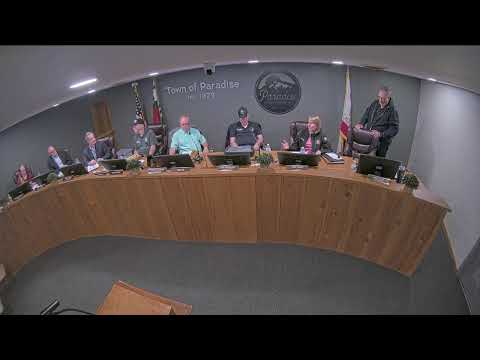
Paradise council introduces post‑construction complaint ordinance and adopts two‑strike enforcement tweak
Summary
Council introduced Ordinance No. 655 to create a post‑construction building code complaint process with an independent third‑party reviewer and CAP committee oversight; council amended the draft to change the strike threshold to two verified strikes and approved the language to proceed to second reading.
The Town Council voted on a staff‑crafted ordinance to give residents a formal path to raise verified building‑code violations discovered after final inspection and to create a limited enforcement mechanism to encourage contractor responsiveness.
Town Attorney Scott Huber and Assistant Town Manager Mark Maddox described Ordinance No. 655 as a companion to the town’s Building Division Corrective Action Plan. The ordinance establishes a published intake form and an independent third‑party technical reviewer to screen complaints alleging post‑construction California Building Code (Title 24) violations (structural, electrical, plumbing and similar code issues). The CAP (Corrective Action Plan) committee would serve an advisory oversight role while appeals of technical determinations could be heard by the full Council.
Under the proposed framework, a verified code violation would generate a "strike" against the permit applicant; three verified strikes were in the initial draft. Multiple councilmembers raised drafting questions about mandatory vs. discretionary language and about the number of strikes. Councilmember discussion focused on practical consequences—for example, whether suspending permits after a single strike could block resolution of the very defect the ordinance sought to fix—and on how owner‑builders and LLC principals would be treated. Huber said the draft applies to permit applicants, including owner‑builders and LLC principals, and confirmed the ordinance uses the permit code in effect at the time the occupancy permit was issued.
After deliberation the Council amended the draft: verified violations shall produce strikes, and the strike threshold was changed from three to two. Council then voted to introduce the ordinance with that modification and to return it for a second reading; if approved at second reading the complaint procedure and intake survey would be published and begin accepting submissions.
The ordinance includes a 10‑year window for bringing latent defect claims consistent with statutory limits and directs staff to use independent third‑party technical review to verify alleged violations before strikes are recorded. Staff emphasized that the process is "one tool in the toolbox" and that other remedies—CSLB complaints, civil or small claims actions and right‑to‑repair pathways—remain available where builders are no longer actively building in Paradise.
Next steps: the Council's vote to introduce Ordinance No. 655 (as amended to two strikes) sends the measure to a scheduled second reading; if adopted at final reading, staff will publish the revised intake survey and begin intake and screening under the new complaint process.