Get Full Government Meeting Transcripts, Videos, & Alerts Forever!
Get email alerts on the Wastewater Testing topic
No spam. Unsubscribe anytime.
Local haulers, city weigh $20,000 lab regimen and limits of wastewater plant
Summary
A long public discussion focused on a proposed 14-sample lab regimen (including a TTO panel) for septic/porta‑potty haulers that the lab quoted at roughly $20,000; the board agreed to meet with the city engineer and Veolia to clarify requirements, sampling logistics and possible plant upgrades such as holding tanks or grinders.
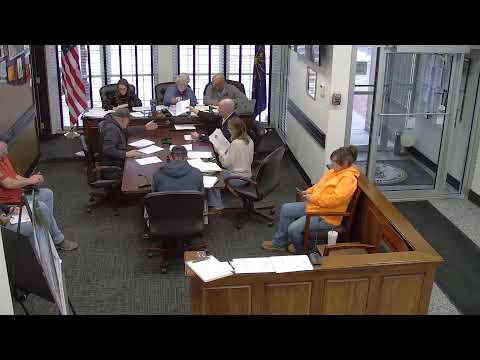
Mayor Charles Wyatt and sanitary hauler representatives spent the bulk of the meeting debating whether and how the city should require expanded lab testing before accepting concentrated septage at the municipal wastewater plant.
The exchange began when a representative for a local sanitary service said he had circulated emails from a testing lab showing a quote for 14 samples and a separate line item for a TTO (total toxic organics) panel that amounted to roughly $20,000. The hauler said Veolia — the city's contracted operator referenced in discussion — had told them it did not strictly require the TTO but that it “would like to have it.” The hauler said the lab warned that dropping the TTO would leave $15,000 of the quote unused, a point he relayed to the board as a direct quote of the lab contact.
Board members and residents raised three main concerns. First, several speakers — including a resident and a council member — said concentrated septage and portable-toilet waste can be much higher in ammonia and other constituents than ordinary sewer flow and can damage the plant if untreated. Second, the city's wastewater treatment facility lacks a holding tank configured to accept and dilute frequent, concentrated loads, which complicates any approach that relies on a communal holding basin. Third, the testing regimen's cost and turnaround time (lab notes showed higher fees for one-day service and reduced fees for longer turnaround) would fall primarily on local haulers; one hauler warned that, if enacted, those costs could be a barrier to local operators and asked whether costs could be shared or whether the city could provide a testing regimen of its own.
Mayor Wyatt and other board members said the next step was procedural: the city engineer, the hauler and Veolia will meet to define the operational needs, the minimum set of analytes to test for, and whether infrastructure changes (a holding tank, grinders, or enforced pre‑treatment) are required for safe acceptance. The board also discussed whether testing practices at nearby municipalities (Chandler, Evansville) provide a model: Evansville uses metered flow and a controlled sampling area, while Chandler was described as relying more on spot samples and an “honor system.”
The board did not adopt a new rule during the meeting. Instead, staff agreed to revisit the Veolia email thread, schedule the engineer-led meeting to clarify required analytes and sample volumes, and return with a recommended protocol and cost-sharing options. Residents and haulers were urged to participate in that technical meeting so the parties could define a practicable testing regimen and any necessary plant or administrative changes.