Get Full Government Meeting Transcripts, Videos, & Alerts Forever!
Get email alerts on the Solar Farms Stormwater topic
No spam. Unsubscribe anytime.
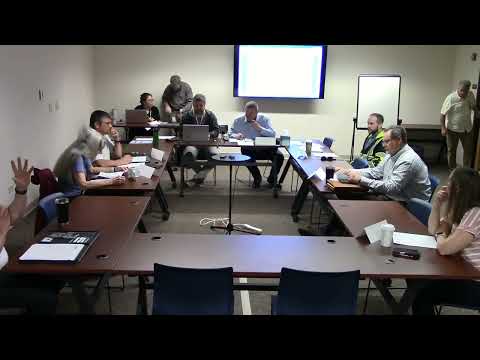
Committee debates solar farm standards: vegetation, floodplain siting, inspection fees and decommissioning
Summary
McHenry County staff outlined proposed Stormwater Management Ordinance changes for solar farms, including treating ground under panels as pervious if native vegetation is established, differentiating farmed vs non-farmed wetlands, requiring maintenance plans and periodic reports, and considering inspection/inspection fees and decommissioning bonds.
Committee members and staff spent a lengthy portion of the meeting on how the county should treat solar farms under the Stormwater Management Ordinance (SMO) and in the conditional use/permitting process.
Staff explained that the county historically treated the area under panels as pervious if vegetation established; recent practice has added stricter requirements to minimize grading and compaction and to require native-vegetation maintenance plans tailored to soil and hydrologic conditions. For farmed wetlands that have been actively farmed, staff said the county may accept on-site mitigation where a native vegetation maintenance plan meets McHenry County performance standards; for non-farmed wetlands, applicants will generally be directed to avoid impacts, use a mitigation bank or pay into the Wetland Restoration Fund.
"If you are using native vegetation to help with release rates... it becomes part of the storm water management system," staff said, noting the county plans to add explicit SMO language to enable enforcement of performance and maintenance requirements and to require periodic maintenance reports. Staff discussed mowing regimes, adaptive management for drought or unusual conditions, and the practical challenges of maintenance under some panel wiring configurations.
Committee members pressed on several operational points: who inspects panels and vegetation (municipalities or county), whether annual fees should cover inspection and long-term monitoring, whether a decommissioning fee or bond should be required to ensure site cleanup at end-of-life, and how floodplain siting and battery-storage proposals should be handled. Members expressed safety and contamination concerns for battery storage in flood-prone sites and noted statutory limits on outright refusal of solar proposals at some future statutory effective dates; staff advised consulting the state's attorney on any legal limits to prohibitions.
Staff said the county will aim for flexible ordinance language that municipalities can adopt or tailor, will consider a separate fee or line-item to cover ongoing inspection and monitoring costs, and will propose a phased implementation (establishment period followed by periodic performance reviews, with a suggested five-year sign-off after establishment).