Get Full Government Meeting Transcripts, Videos, & Alerts Forever!
Get email alerts on the Right Of Way Policy topic
No spam. Unsubscribe anytime.
After water-line damage, South Lyon moves to tighten right-of-way bonds for fiber work
Summary
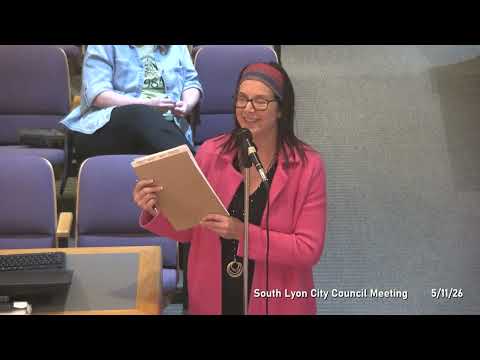
City Manager Doug Baky told the council a subcontractor hit water lines during fiber-optic work in Hidden Creek; the city held a $5,000 cash bond and staff said they will pursue stronger cash-bond and global-bond approaches and review easement capacity.
City Manager Doug Baky told the council the city encountered damage to its infrastructure when a fiber-optic subcontractor hit water lines in the Hidden Creek area and the city responded by holding the company's $5,000 cash bond.
"We did hold their bond... about three days after that, they decided to pay the invoice," Baky said, describing the city's action and follow-up with the contractor. He said the city is working with the city attorney to revamp its bonding approach for right-of-way work: seeking cash bonds rather than surety-only bonds for small projects and considering a global cash-bond structure for larger projects with separate individual right-of-way bonds.
Council members pressed staff on the limits of existing utility easements, warning there may be little room left for additional fiber lines in the public easements that run from the center of the street onto private property. Council Member Curtzwell and others asked staff to confirm how many additional lines could be accommodated and whether contractors were leaving older infrastructure in place rather than removing it.
Manager Baky said staff will continue to coordinate with DPW and the city attorney and will provide contact details for contractors working in neighborhoods so residents can report restoration or damage issues. Council members suggested documenting easement capacity and using that analysis to guide future Metro Act interactions and permit decisions.