Get Full Government Meeting Transcripts, Videos, & Alerts Forever!
Get email alerts on the Homelessness topic
No spam. Unsubscribe anytime.
Council asks police chief to draft letter on Riverwalk encampments; effort to enforce camping ordinance fails to advance
Summary
After extensive public comment from pastors, volunteers and residents, Marion’s council unanimously directed Police Chief Claire to draft a letter seeking coordinated engagement with social services and housing partners on riverbank encampments. A later motion to immediately enforce the camping ordinance failed when the second was withdrawn.
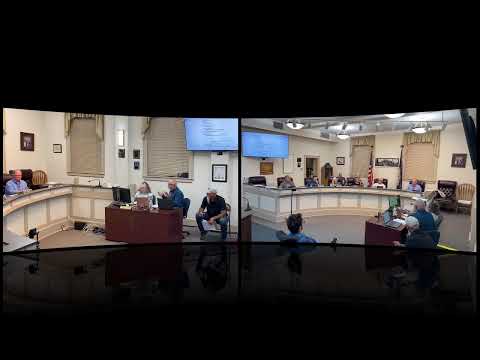
Marion Town Council members on April 7 voted unanimously to ask Police Chief Claire to draft a letter asking social‑service and housing partners to engage directly with residents of riverbank encampments and work toward a coordinated plan.
The vote followed lengthy public comment from faith leaders and volunteers. Pastor Kayla Copp of Ebenezer Lutheran Church urged the council to treat people experiencing homelessness with dignity and to seek collaborative solutions: ‘‘we should try to make that as safe and clean as possible,’’ she said. Community volunteer Nolan described ongoing shelter and outreach work and gave the council local service figures, saying his group had sheltered about 80 women and 150 men for at least one night since Dec. 2 and served hot meals nightly; he also said volunteers had expended substantial personal funds to support clients.
Chief Claire agreed to draft a council letter requesting a presentation of strategic goals and increased engagement by county social services and other partners; Chief Claire told council, ‘‘I’ll type something up and have it to the mayor in the next 48 hours.’’
What council debated Council members and staff discussed enforcement of Marion’s camping ordinance, zoning remedies and the limits of municipal authority when residents occupy private property by the property owner’s invitation. Staff read the town’s camping ordinance aloud and outlined the enforcement process used by the town: an initial notice, 15 days to cure, and potential court enforcement if unresolved. Staff said the ordinance allows short‑term private camping only under specific conditions (one camping unit per property tied to a service building, 24/7 sanitary facilities available, 72‑hour consecutive limit, and no primitive camping) and that failure to comply can lead to a class‑3 misdemeanor citation and a court‑determined fine (up to $500) applied daily if noncompliance persists.
Council did not adopt an immediate enforcement action. A motion to enforce the camping laws was made and seconded but the mayor rescinded the second, leaving the motion to die. Council members said they were reluctant to move people without a viable alternative and emphasized the need for social‑service coordination. Staff and council noted that the property owner at Riverbend has told police he does not want the residents removed, and that zoning enforcement would by law target the property owner and could progress to appeal and court remedies.
Quotes and local context - Pastor Kayla Copp: "we should try to make that as safe and clean as possible." (public comment) - Nolan (faith‑based shelter volunteer): "I've had 80 women and 150 men sleep at least one or multiple nights in our church. . . . We've helped over 40 people recover documents." (public comment) - Chief Claire (directing action): "I'll type something up and have it to the mayor in the next 48 hours." (council direction)
Next steps Council approved the Chief’s drafting of a letter to request coordinated engagement; staff and council members agreed to invite county social services to a future council meeting to discuss practical next steps. Council emphasized that zoning enforcement is legally available but that moving people without housing alternatives simply shifts the public‑health and safety impacts elsewhere.
What was not decided: council did not order immediate removal of encampments or approve any new spending for sheltering or housing at the April 7 meeting.