Get Full Government Meeting Transcripts, Videos, & Alerts Forever!
Get email alerts on the Workforce And Recovery topic
No spam. Unsubscribe anytime.
Owsley County hears plea to restore opioid-abatement support and expands remote-work help
Summary
Regional workforce and legal-aid representatives told the fiscal court they are helping residents find remote work and clear legal barriers to employment, and requested $18,000 to fund a local legal clinic for people affected by opioid use.
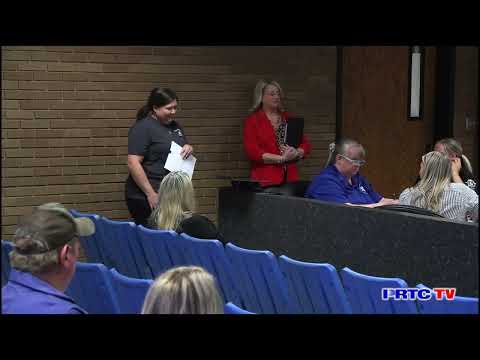
Representatives from a regional workforce board and a nonprofit legal-aid program told the Owsley County Fiscal Court on Tuesday that continued local support is needed to expand remote-work opportunities and to help people in recovery reenter the workforce.
Becky Miller, introduced as representing EKE / Middle Kentucky Community Action, said the regional Teleworks program — a remote-work training initiative run through community-action agencies — remains active and provides customer-service, digital literacy and financial-literacy credentials. "Teleworks is a remote program that EK established over 15 years ago," Miller said, adding that Middle Kentucky serves 23 counties and that its programs have placed many young people in unsubsidized employment.
Miller also described recent opioid-abatement work administered through the regional program and told the court that her local office has served 54 residents since July, with 51 receiving support services (transportation, child care, work clothes and similar assistance) and 40 moving into unsubsidized jobs. She said the regional program previously received allocations of $400,000 and $500,000 to serve 12 counties but that recent funding for the regional effort has been reduced; Miller said middle-Kentucky staff will ask county fiscal courts to fill gaps so local services can continue.
"We want to continue putting 40 people into taxpaying jobs, but we cannot do that without the support of the fiscal courts," Miller said.
Appalachian-area legal services representatives followed, asking the court for direct support to host recovery-oriented legal clinics. A presenter who identified himself on the record as Evan explained the civil-legal work his organization provides for low-income and vulnerable people — eviction and housing help, expungements, benefits and related services — and requested $18,000 to fund a clinic that would serve about 18 people and cover follow-up filings and court costs.
Devin (last name Skins), introduced as the directing attorney for the office referenced, described the program’s caseload and outreach efforts. "In 2025, we were able to close almost 400 cases," Skins said, and he emphasized that expungement clinics and recovery-focused legal assistance can remove barriers that prevent people from getting jobs or housing.
Court members asked logistical questions about where residents should go for services; presenters said a local representative will be available in the courthouse on weekdays and that printed materials and signposting will be provided. The presenters also said they can provide reporting formats to meet county reporting requirements tied to settlement dollars.
The fiscal court did not take a recorded vote on the $18,000 request during the portion of the transcript provided; presenters said they would follow up with the court and with fiscal boards in the region.
The court’s next business items included engineering and roadwork discussions unrelated to the workforce presentations.