Get Full Government Meeting Transcripts, Videos, & Alerts Forever!
Get email alerts on the Speed Cameras topic
No spam. Unsubscribe anytime.
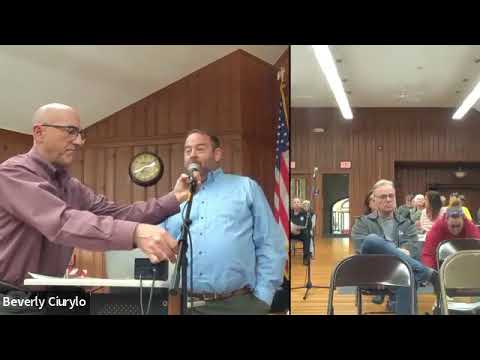
Columbia committee recommends starting process to install speed cameras; residents raise privacy, traffic and vendor concerns
Summary
A town traffic committee advised the board of selectmen to begin the process of deploying automated speed cameras in Columbia; experts said the cameras reduced speeds in other Connecticut towns, while residents pressed officials on privacy, diversion to side streets, appeals and vendor oversight. No vote was taken.
The Town of Columbia’s traffic safety committee recommended that the board of selectmen begin the process of integrating automated traffic‑enforcement cameras, a measure committee members say could reduce speeding on busy local roads. The committee has forwarded recommendations to the board but did not take a formal vote at the meeting.
The recommendation followed a technical briefing by Sean Barry of the University of Connecticut’s T2 Center, who told residents that a 2023 state law allows municipalities to install speed cameras under a state review and approval process administered through the state traffic authority and DOT. “I’m a conduit of information. I have no horse in this race,” Barry said, summarizing how the Office of State Traffic Authority posts approved municipal plans and checklists for towns exploring the program.
Barry described the program’s required steps and limits, including a 30‑day public warning period; local verification of vendor images by a municipal employee; and fines bounded by statute (Barry said the first offense carries a maximum $50 fine plus an administrative fee of about $15, with subsequent fines typically $75 plus the fee). He pointed to Middletown and Washington as early adopters and said their posted data show reductions in speeding and fewer crashes after cameras were installed. “They’re not money generators. They’re meant to slow people down,” he said.
Committee members and residents pressed for practical details. Officials acknowledged operational challenges in other towns: large ticket volumes that require staff time or hiring retired officers for review, the need to provide alternatives for residents who cannot pay online (kiosks or in‑person options), and statutory limits on how municipalities may spend revenue — principally for improving transportation mobility, infrastructure, or paying program costs.
Privacy and data retention were recurring concerns. Residents asked whether cameras capture faces or are subject to Fourth Amendment limits; speakers replied that systems are designed to read license plates, not to collect faces, and that much transactional data is purged according to program rules (presenters said most personal payment or transactional data are deleted shortly after a ticket is resolved and that longer retention is limited). One participant asked, “How is the state handling that? How are courts handling that?” and was told that the statute and the municipal ordinance define the process and appeals.
Several attendees voiced other objections and trade‑offs. Some residents worried that posted camera zones would divert speeding traffic onto secondary streets, increasing danger on previously quieter roads; others asked whether the camera program would worsen response times for emergency vehicles or create maintenance issues for snow plows if speed bumps were used on small roads. Officials responded that cameras are fixed (they do not swivel), must be accompanied by signage, and that the company and an engineering study normally help locate zones to avoid predictable safety trade‑offs.
Questions about vendor oversight and appeals were frequent. Presenters said the committee had vetted three vendors and that the town would follow a public bid process; appeals procedures must be specified in the town ordinance and statute provides example grounds for appeal (for example, stolen vehicle, emergency response, calibration errors, or other statutory reasons). Barry cautioned that motorcycles and vehicles with obscured plates can be harder to capture reliably.
The committee also reported it would not pursue speed bumps, humps or tables after local testing produced strong public opposition. Instead, members and residents discussed complementary measures such as improved signage, targeted enforcement by resident troopers or traffic units, and using camera revenue to fund sidewalks, crosswalks and other mobility projects allowed by statute.
No formal ordinance vote or contract award occurred at the meeting; organizers said they would bring more information to the board of selectmen and hold further public sessions. The committee’s recommendation to begin the application process will be considered by the board in a future meeting.
What’s next: the board of selectmen must adopt a municipal ordinance that conforms to state requirements before an application to the state can be accepted; the committee said it will continue vetting vendors and prepare materials for a future public hearing and board vote.