Get Full Government Meeting Transcripts, Videos, & Alerts Forever!
Get email alerts on the Elderly Tax Freeze topic
No spam. Unsubscribe anytime.
Columbia board weighs elderly property-tax freeze, estimates about 34 households would qualify
Summary
At its May 5 meeting the Columbia Board discussed a proposed elderly property-tax freeze with draft thresholds ($56,500 for couples, $46,300 for singles) and debated age and residency criteria; officials estimated the plan would shift roughly $24,000 in taxes annually to other taxpayers and asked the town attorney to help refine eligibility rules.
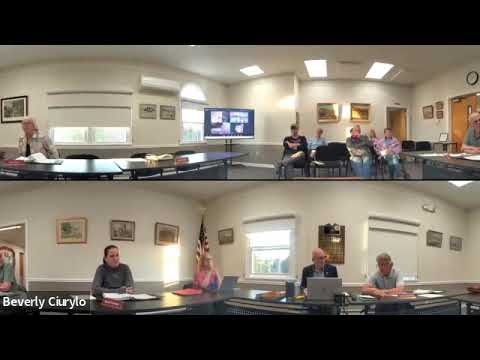
At its May 5 meeting First Selectman Steve Everett led a discussion of a proposed elderly property-tax freeze designed to ease property-tax bills for long-time residents on fixed incomes.
The draft that board members reviewed used income cutoffs of $56,500 for a couple and $46,300 for a single filer. The group debated whether the age eligibility should be 70 or 75; several members said 70 felt more appropriate while one referenced a 75-year threshold in an AI-generated working draft. Everett said the town's initial estimate showed about 34 households could qualify under the sample numbers and that the policy would shift roughly $24,000 a year of tax burden to other taxpayers.
"If we did these numbers... there's about 34 families that would qualify. The tax burden that we would lift from them and move to others is only $24,000 a year," Everett said.
Resident John Py asked about how existing veteran 100% property-tax exemptions interact with the proposal. "I'm one of those 18 people. Can I get out of that?" Py asked, seeking clarity about opting down from the veteran exemption.
Board members pressed staff to define residency and ownership-duration requirements (for example, whether applicants must have owned property for 10, 15 or 20 years) and whether benefits should be tiered by years of ownership. Several participants stressed that the town should avoid a design that requires excessive paperwork or total-household-income calculations; one member cited a neighboring town where a prior program required multiple household tax returns and proved administratively burdensome.
Why it matters: Board members said the program would target residents who are "house-rich and cash-poor" and could prevent hardship from rising property taxes. They also cautioned that the town must balance relief with the fiscal impact on other taxpayers.
What happens next: The board asked staff to consult the town attorney, compare policies used in nearby towns, refine eligibility criteria, and return with a narrower draft for formal consideration and possible placement on a town meeting agenda.