Get Full Government Meeting Transcripts, Videos, & Alerts Forever!
Get email alerts on the Community Impact topic
No spam. Unsubscribe anytime.
Residents press Lee County hearing on eagle protections, farmland loss, noise and decommissioning
Summary
Multiple residents at the May 27 hearing raised concerns that Prairie Broom Solar could threaten an active bald eagle nest, reduce prime farmland, depress property values, and produce inverter noise; the applicant said it will follow a 660-foot eagle buffer, post financial assurance and pursue mitigation agreements.
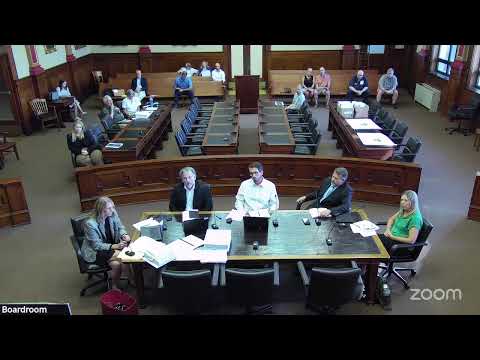
At a May 27 Lee County zoning hearing, residents raised sustained objections to the Prairie Broom Solar special use permit application focused on wildlife impacts, farmland conversion, property values, noise and long-term accountability.
Several speakers cited an active bald eagle nest on or near the project footprint and questioned whether protections were adequate. Kathy Eyster, an online participant, asked whether noise studies examined construction impacts on nesting eagles. Adam Samansky, the project's director of development, said the team identified an active nest, coordinated with the Illinois Department of Natural Resources and U.S. Fish and Wildlife Service, and will maintain a 660-foot buffer with no construction activity within that buffer during the breeding season.
Longtime residents framed the proposal as a threat to prime agricultural land and community character. In a widely heard, emotional statement, Jen Tarvstead described multi-generational ties to Lee County farmland and asked how the county will replace annual agricultural production if 1,800 acres are leased to solar. "When you move to the country, do you envision living next to miles of fencing and panel after panel of solar infrastructure?" she asked, emphasizing impacts on landscape and quality of life.
Neighbors also pressed the applicant on inverter and operational noise, construction traffic and whether property owners would be compensated if values decline. The applicant said a preliminary noise study was provided (appendix N) and that road-use agreements, landscape screening, construction-hour limits and ongoing reporting would be implemented; however, some residents criticized reliance on applicant-funded studies and said independent verification was not available in the hearing record.
Several commenters sought clarity about decommissioning and ownership changes. Donnie Dcastro said leases are executed with Prairie Broom Solar LLC (the project company) so a sale typically transfers interest in the LLC, and the decommissioning financial assurance is intended to guarantee restoration even if ownership changes. Presenters cited a $15.5 million decommissioning estimate and a bonding schedule that reaches full funding by year 10.
Supporters also spoke. Dr. David Helmick, a college leader, urged support for the project citing local partnerships; representatives of building trades and labor unions highlighted jobs and local tax revenue. The hearing record thus reflects a divided public response with specific technical and long-term accountability concerns unresolved in the hearing.
The hearing officer closed the record and said he will prepare a report for the Lee County Board, which will take the final action on the special use permit. Residents were told the applicant may file a supplemental natural-resources report within 10 business days and that the hearing record will include the additional filing if submitted.