Get Full Government Meeting Transcripts, Videos, & Alerts Forever!
Get email alerts on the Traffic Calming topic
No spam. Unsubscribe anytime.
Brunswick staff plan temporary speed humps after data collection; residents press for stop sign at Booty intersection
Summary
At a special Brunswick workshop, town staff said they are gathering speed data on Spring Street and will install speed-feedback signs and at least two temporary speed humps in May, then reevaluate in June and September; residents urged an all-way stop at Booty and Spring and raised safety concerns for children and past collisions.
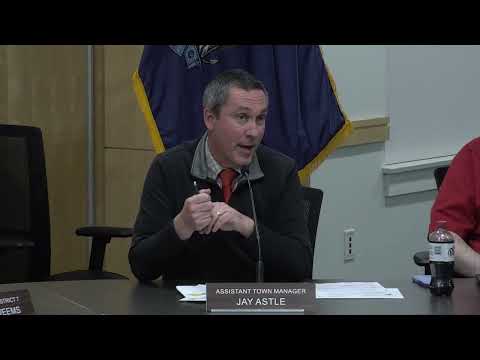
Assistant Town Manager Jay Ael said town staff will collect weeks of speed and volume data on Spring Street, install a permanent speed-feedback sign this month and place at least two temporary speed humps as soon as May, then reassess the corridor before recommending any permanent installations.
The workshop, held as a special Spring Street traffic-calming session, focused on the stretch between McKeen and Colombia, including the Belmont and Booty intersections. ‘We’re collecting baseline speed data now and will compare it to measurements in June with the temporary humps in place and again in September,’ Jay Ael said, adding the town will remove temporary humps before winter plowing begins.
Engineers emphasized they must follow national guidelines when evaluating stop controls. Trey Cruz, the town engineer, cited the Manual on Uniform Traffic Control Devices and said all-way stops should not be used primarily for speed control. “The MUTCD makes a very explicit recommendation that you should never do them for speed control,” Cruz said, noting stop-sign warrants are based on volumes, sight distance and crash history.
Residents pushed back. Hillary Shendai, who lives on Spring Street, asked why a previously requested all-way stop at Booty and Spring is no longer on the table. “Could someone explain why that’s now not on the table?” she asked. Several neighbors argued that local experience — including near-collisions — warrants immediate action.
Long-time resident Robin Riley Robinson told the workshop she had “personally witnessed three collisions” at the Booty and Spring intersection and urged the town to weigh local observations alongside engineered studies. Carolyn Boliner, another neighbor, said, “If you put in a stop sign … it will help,” and asked staff to weight school arrival and dismissal times when analyzing data.
Staff described trade-offs among options. They said temporary speed humps are expected to be seasonal (installed May–October) and require advance signage and homeowner notification because humps often create additional noise when vehicles accelerate after crossing them. The town also raised the possibility of double-yellow centerline striping, curb bumpouts, raised crosswalks and permanent humps if the data show sustained problems.
Police enforcement was discussed but staffing limits were noted: staff said the department is about eight officers below full strength, which constrains routine targeted patrols. Staff also clarified the current automated counters collect only vehicle counts and speeds, not pedestrian counts; data can be broken down by lane and hour and will exclude days with atypical conditions such as storms or holidays.
Councilor and District 6 representative Ramona Tini said she had lived next to a speed hump installation elsewhere and found speeds reduced but nearby noise increased, underscoring trade-offs residents must weigh. Staff agreed to post raw and parsed data and their evaluation rationale on the town website and offered a follow-up meeting to review results and explain how they weight different data windows (school times, busiest hours) in their recommendations.
The workshop ended without a formal vote; staff described a path forward of data collection now, temporary humps in May, and a June and September reevaluation to decide on permanent measures.