Get email alerts on the Climate Action Plan topic
No spam. Unsubscribe anytime.
Select Board adopts 56‑recommendation Climate Action Plan, sets annual prioritization approach
Summary
The East Ham Select Board adopted an 83‑page climate action plan (with a six‑page executive summary) that lists 56 non‑mandatory recommendations for the next 5–10 years and proposes annual prioritization and task‑force options for implementation.
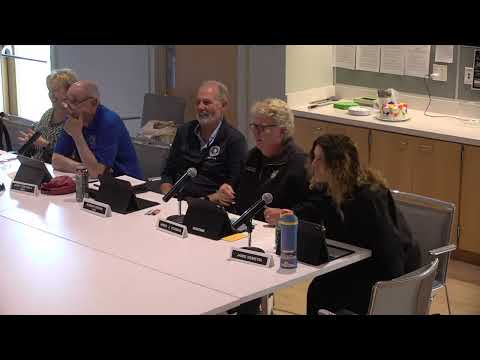
The East Ham Select Board voted May 18 to adopt the town’s climate action plan, a framework of 56 recommendations intended to guide local climate mitigation and resilience work over the next five to ten years.
Steve Tupper of the Cape Cod Commission, who presented the plan, told the board the recommendations were distilled from town plans, best practices and extensive public outreach. “Those 56 recommendations are not mandates,” he said, adding the plan is intended as a strategic framework to guide annual prioritization and staff‑led implementation.
The plan highlights multiple sectors — buildings, energy, transportation, natural resources and community — and recommends a mix of near‑term, investigatory and longer‑term actions. Presenters and board members emphasized that the town should prioritize actions each year rather than attempt all recommendations at once. Tupper outlined practical next steps including annual prioritization through the town’s committees and the potential creation of a task force to shepherd implementation.
Several board members pressed on priorities and equity. One member urged attention to low‑lying roads and municipal building systems for near‑term work and stressed outreach and incentives before regulation. “When you come forward with 56 recommendations it’s kind of expected…education is the first step,” a board member said, and another warned that zoning changes require careful thought about who they most affect.
After discussion the board moved to adopt the plan; the motion passed. The adoption directs staff and the climate action committee to work through the plan’s recommendations, report back with prioritized annual work programs, and consider task forces or interdepartmental teams to support implementation.
Board members and presenters noted the plan is a living document: many recommendations codify existing efforts, others will require new resources or coordination with regional partners. The plan’s executive summary and full report were placed on the public record for use in grant applications, budgeting and committee work.
AI generated
The text on this page is AI generated. Summaries, highlights, analysis, and video transcripts are all produced from the original source material.
AI can make mistakes, so if you spot one, and we will fix it for everyone.
Note: the source content is unaltered by us. Any content source we link to, be it a video, an audio recording, or a document, is presented exactly as its publisher released it. That publisher is usually a government body, sometimes an individual official or another organisation.