Get Full Government Meeting Transcripts, Videos, & Alerts Forever!
Get email alerts on the Modular Classrooms topic
No spam. Unsubscribe anytime.
Zebulon leaders weigh temporary modular classrooms to ease school overcrowding
Summary
Zebulon officials reviewed a proposed text amendment to allow modular/mobile classrooms on existing school sites as temporary expansions; discussion centered on appropriate time limits (proposed 3–5 years), safety and building-code compliance, maintenance standards, and coordination with Wake County Public School System. The public hearing drew no speakers and was referred to the planning board.
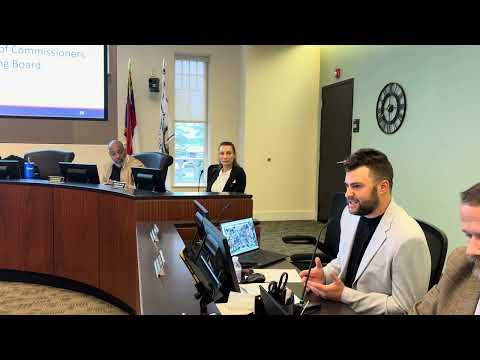
ZEBULON — Town leaders and planning staff on Tuesday reviewed a proposed text amendment that would allow mobile or modular classroom buildings as temporary expansions on existing school sites, saying the units could help relieve overcrowding while permanent schools are planned and built.
Planning staff told the joint public hearing the amendment would create a temporary-use pathway for single-classroom trailers and larger modular buildings that currently cannot meet the town’s commercial design standards. "Our UDO doesn't permit these as-is; the amendment would allow modular classrooms as a temporary solution and let staff and the board place conditions on permits," a planning staff member said during the hearing.
The discussion turned to how long ‘‘temporary’’ should last. Several board members backed a 3-to-5-year cap as a starting point but urged clear language about what happens at permit expiration. "If there's a three-to-five year cap, we should specify whether the district must reapply or appear before the board when the cap is reached," the staff member said. Commissioner Madison asked the board to pay attention to the amendment's wording so temporary units do not become semi-permanent.
A design professional who said they work on Wake County school projects cautioned that design and construction timelines can be long. "Design alone can take up to five years," the professional said, recommending the board consider longer caps or robust reapplication and inspection rules so the town does not repeatedly renew short permits and end up with long-term modular buildings.
Officials also raised safety questions. Board members asked whether modular units meet structural and storm-resilience standards; staff replied that units must comply with the International Building Code and said modern modular classroom buildings meet hurricane-safety standards used by the district.
Several town leaders said they have advocated directly with Wake County Public School System officials, including the superintendent, to highlight Zebulon’s capacity needs. Mayor Pim said the district is aware of local overcrowding and that the proposed modular units would be intended to fill gaps until permanent schools, such as Pool Road Elementary and Marsh Road Elementary, come online.
Supporters of temporary modular units said the approach would keep students in the Zebulon community instead of sending them to neighboring towns, reducing transportation burdens for families. Dissenting remarks focused on a need for explicit maintenance and condition standards so modulars do not deteriorate into unsafe or blighted structures.
The chair opened the public hearing and invited testimony; no one spoke in favor or opposition and staff reported no email comments. The chair closed the hearing and referred the item to the planning board for further consideration. The meeting concluded with a motion to adjourn, which passed unanimously (exact vote count not specified in the transcript).
Next steps: The planning board will take up the proposed text amendment and may recommend specific time limits, permit conditions, maintenance standards, and reapplication procedures before the Board of Commissioners considers adoption.