Get Full Government Meeting Transcripts, Videos, & Alerts Forever!
Get email alerts on the State Legislation topic
No spam. Unsubscribe anytime.
Local officials hear wide-ranging state legislative briefing affecting annexation, public safety and fees
Summary
Council staff gave an extended briefing on state legislation — including proposed changes to bail (SB 3), annexation outreach (SB 59), sewer-notice rules (SB 6), and limits on permit fee increases tied to CPI — and flagged potential local impacts and unintended zoning consequences.
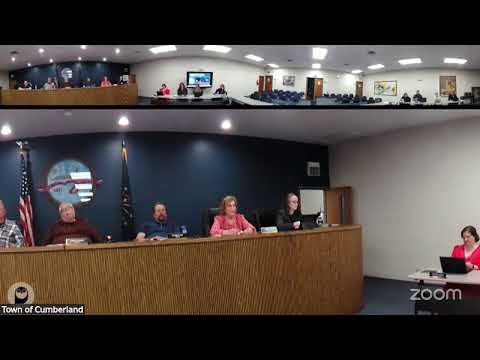
Ben, a town staff member, opened a 30-minute legislative briefing that touched on multiple state bills he said could affect town operations and local land use.
He said Senate Bill 3 would ask voters to expand circumstances in which bail may be withheld beyond murder and treason. He summarized Senate Bill 6 as requiring broader notice and advertising for sewer-extension actions and described Senate Bill 59 as imposing additional annexation outreach and notification requirements for municipally led annexations, including notifying county authorities and holding public outreach meetings. "If everyone agrees that's great because then the legislature may agree to give a rate that covers everyone," Ben said about a municipal task-force process tied to House Bill 1240.
Ben highlighted several bills with potential zoning or operational effects: Senate Bill 176 would allow shooting ranges or sporting-goods stores to seek permitting in any commercial, industrial or agricultural zone without the usual local review, which he called a problematic change for neighborhood proximity. He also warned that recent tobacco/vape retail prohibitions aimed at keeping sales away from schools and residences could unintentionally bar sales in mixed-use buildings that contain residential units, shifting local zoning consequences.
On municipal finance, Ben said the legislature postponed an income-tax implementation date and that some bills would limit how often municipalities could adjust permit or building-fee schedules to once every five years tied to the consumer price index. "At some point it more or less will force some cost sharing and burden from developers and builders of the taxpayers," he said, cautioning that CPI-based indexing may understate municipal cost pressures.
Ben also described public-safety and employment-related measures: Senate Bill 180 contains language allowing current or former police officers and firefighters to pursue medical benefits from employers without first exhausting workers' compensation claims. He briefly noted bills concerning syringe exchange sites, doxing protections for legislators (SB 140), election-board changes and expanded definitions related to grooming laws.
The briefing concluded with Ben offering to circulate local resolutions and materials he referenced. The council did not take formal action on any of the bills during the meeting; staff advised council members to expect follow-up as legislation advances.