Get Full Government Meeting Transcripts, Videos, & Alerts Forever!
Get email alerts on the School Budget topic
No spam. Unsubscribe anytime.
Budget committee split but leans toward supporting school budget amid fund‑balance debate
Summary
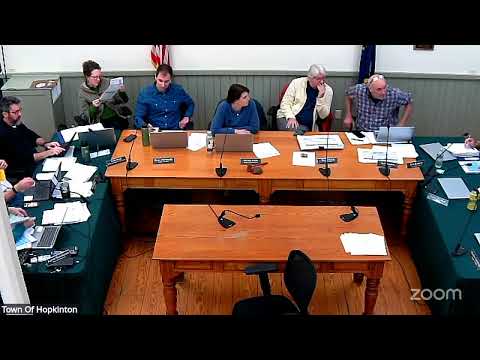
At a Jan. 14 meeting, the Hopkinton Budget Committee largely signaled support for the school district’s proposed 2026 budget but members raised strong objections about using last year’s unexpected fund balance to pay capital and security projects rather than returning money to taxpayers.
Budget committee members who reviewed the school district’s proposed 2026 spending said the budget is generally reasonable but expressed sharp differences over the school board’s use of an unanticipated fund balance and large capital warrants. "If you take the 24–25 operating budget and then you minus this 886,000 of capital projects that actually came out of operating, it brings you down..." committee member Lauren said, arguing the district used operating surpluses to support immediate capital projects and that those actions change the meaningful year‑over‑year picture for taxpayers.
School officials told the committee the district had a larger-than-expected fund balance in 2024 driven largely by unfilled instructional-assistant positions and underspends; the board designated roughly $439,000 of that balance to encumbered capital projects and drew on contingency lines to complete security and other improvements. A school representative said the security-redesign work was begun in advance of the current budgeting cycle and noted that some spending (about $135,000) had already begun before the redesign vote.
Legal and program constraints featured in the discussion. A committee member reminded colleagues that instructional-assistant (IA) positions are commonly tied to individual student IEPs, and that reducing or removing those positions raises legal and service-delivery implications. "It's one thing to say we weren't able to fill them, but... there is a liability issue involved," a member said, noting IEP obligations could limit how the district could reallocate or eliminate IA lines.
Public comment included a call from a resident who said rising property taxes forced a working nurse to leave town, an appeal underscoring committee members’ concerns about affordability. Trish Lambert, a resident, told the committee, "Water is so important to people... if you're having trouble with water and it's having issues, people are not going to trust it," linking infrastructure concerns to broader community confidence.
Outcome: committee members took a nonbinding straw poll. A majority said they would support the school budget "as proposed," while at least one member said they would vote against it because of fund-balance and long-term affordability concerns. Committee leaders will present the compiled one‑page tax-impact numbers at the Feb. 4 public hearing; any formal reductions or motions may be raised at that meeting per the committee’s rules.
Why it matters: the school budget is the largest driver of the town’s tax rate. The committee’s debate — particularly about how surplus funds are used — frames the public conversation that will determine whether voters keep the proposed level of spending intact, modify warrant language or push for returning surplus dollars to taxpayers.