Get Full Government Meeting Transcripts, Videos, & Alerts Forever!
Get email alerts on the Municipal Budgeting topic
No spam. Unsubscribe anytime.
Swarthmore council debates $250,000 emergency reserve, possible emergency‑services tax amid ALS transition
Summary
Councilors reviewed a draft 2026 budget that shows a roughly $100,000 surplus and debated setting aside $250,000 for emergency services versus a smaller contingency tied to an estimated $71,000 net ALS cost; the discussion also covered an Emergency Services Tax and a proposed business‑development position.
Swarthmore Borough Council spent the bulk of its Nov. 3 work session hashing out how aggressively to fund public‑safety needs as the borough and neighboring municipalities consider creating an ALS (advanced life support) authority.
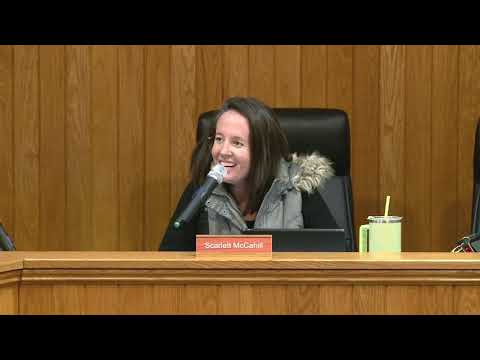
"We have some opportunities with this budget," said Council Vice President Scarlet Kel, opening discussion after the finance committee outlined a preliminary budget showing an approximate $100,000 surplus. Borough Manager Sean described elements that bolstered the surplus, including a real‑estate transfer‑tax estimate and conservative property‑tax assumptions.
The central question was whether to place $250,000 into a restricted emergency‑services reserve now — an amount discussed during talks with Swarthmore College — or to set aside a smaller contingency more closely tied to the projected 2026 net ALS impact of about $71,000. "If the plan moves forward as it's being discussed now, we'll be depending on how the bylaws are written," Sean said, cautioning that reimbursement timing from insurers could create cash‑flow pressure.
David, speaking for members involved in safety planning, said the borough faces significant capital needs for fire apparatus that are already at or beyond expected service life and urged prudence. "There will be capital expenditures and unanticipated costs in these types of projects," he said, arguing for savings to avoid repeated appeals for one‑time college or grant funds.
Councilors debated whether to fund an Emergency Services Tax (EST) — a restricted millage that would dedicate revenue to police, fire or ALS — or to rely on a general property‑tax increase for broader flexibility. "An EST fund‑restricts that money for use by ALS, police or fire," Sean said. "Whereas a 0.5‑mill increase in property tax could be spent on any fund."
The finance committee also recommended budgeting $25,000 to $30,000 for a business‑development position to support downtown vitality; the committee flagged that the line currently appears as $30,000 in the draft and suggested work with municipal‑membership consulting resources to craft a job description.
Several council members asked for more precise figures before votes next week: confirmation of a recent county assessment, final hydrant‑rental fees (Aqua), and whether the college contribution terms remain unchanged. The council agreed to revisit the capital‑transfer amount and the EST structure at the next meeting, with staff directed to recirculate recalculated mill‑rate scenarios.
Next steps: staff will update revenue assumptions, clarify utility and hydrant charges and present revised options (including EST vs. general property‑tax approaches) for council action at the subsequent meeting.