Get Full Government Meeting Transcripts, Videos, & Alerts Forever!
Get email alerts on the Referendum Statehood topic
No spam. Unsubscribe anytime.
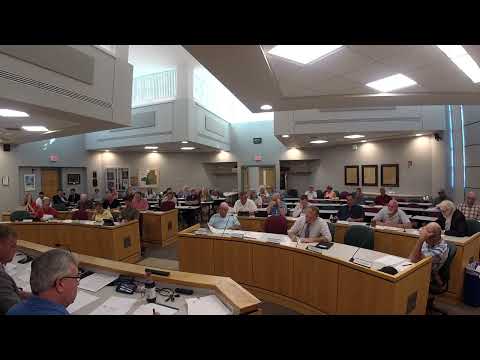
Supporters present ‘Illinois Separation’ referendum to Tazewell County Board
Summary
A local resident and a New Illinois representative urged the board to put a nonbinding referendum on the ballot to explore separating from Cook County; speakers said the measure merely authorizes dialogue and does not itself create a new state.
Two public commenters presented information about a nonbinding ballot question asking whether counties should explore separating from Cook County and potentially forming a new state.
Resident Richard Jones, who gave his address and said he has lived in the county since 1974, described the "Illinois Separation Referendum," telling the board that 33 counties had already passed versions of the question with an average approval of about 74 percent. Jones emphasized the referendum is a first step to open discussion and does not authorize secession, joining another state or immediate statehood; rather, he said, it would direct county boards to "correspond with the boards of other counties of Illinois outside of Cook County about the possibility of separating."
A representative from Illinois Separation Referendum (identified in the record as Lorette Nulan) expanded on constitutional and practical issues, citing Article IV, Section 3 of the U.S. Constitution as the route for statehood and noting that legislative and congressional approval would be required. Nulan said the referendum is intended to register the will of local voters and to authorize county officials to begin exploratory talks about assets, liabilities and the scope of potential separation.
Speakers acknowledged many complicated follow-up questions — dividing debt and pensions, the location of institutions such as universities and prisons, and which counties might participate — and said those details would be addressed only after a referendum indicated sufficient local interest.
No board action to place the referendum on the ballot was recorded in the transcript during this meeting; the remarks were recorded during the public-communications portion of the agenda.