Get Full Government Meeting Transcripts, Videos, & Alerts Forever!
Get email alerts on the Housing Rehab Cdbg topic
No spam. Unsubscribe anytime.
Polk County board closes out CDBG housing-rehab grant; presenters highlight senior focus, Energy Trust partnership
Summary
Polk Community Development Corporation told Polk County commissioners the county’s CDBG housing-rehabilitation grant has been spent, with 80% of beneficiaries seniors; presenters described eligibility (owner‑occupied, ≤80% AMI), Energy Trust of Oregon incentives used to stretch funds, and procedures for lead/asbestos work.
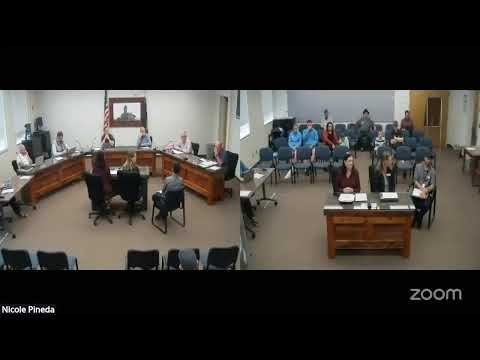
The Polk County Board of Commissioners on May 27 heard a public‑hearing report closing out a Community Development Block Grant (CDBG) housing‑rehabilitation project and thanked Polk Community Development Corporation staff for work assisting low‑income homeowners, particularly seniors.
Polk Community Development Corporation program developer Diana Sitkanovich told the board the closeout report shows the grant funds have been used and that "fully 80% of the people we help are seniors," a group the grantee said benefits by being able to age in place with family and community support. Sitkanovich presented program results and answered commissioners’ questions during the required public hearing.
The board’s report and presenters’ answers laid out who qualifies and how work is delivered. Deputy director Kimberly Lyle said CDBG housing rehabilitation funds are restricted to owner‑occupied, single‑family homes and are income‑based; applicants must be at or below 80% of area median income before proceeding. Lead housing rehabilitation specialist Melanie Fischer described the next steps for eligible homeowners: staff contact the homeowner, schedule a site visit, perform a home energy assessment and, where appropriate, coordinate energy upgrades using incentives from Energy Trust of Oregon. Fischer said the program solicits at least three contractor bids and lets the homeowner choose the contractor.
Commissioners pressed presenters on health‑and‑safety work and funding. Presenters said third‑party environmental testing determines the presence of asbestos; if asbestos is non‑friable and does not interfere with the planned work it can be encapsulated, but where abatement is required the expense comes out of the grant. Lyle added that for smaller localized projects (under $25,000) abatement is limited to the affected area. On lead paint, presenters said removal or disturbance of lead‑painted materials is conducted by lead‑certified contractors who use containment measures and that staff perform monthly inspections to ensure compliance.
Board members also asked what the CDBG award leverages in additional funding. Presenters said they track leverage figures but did not have complete totals at the hearing; they reported that Energy Trust of Oregon incentives totaled about $647,000 in 2026 and that roughly $20,000 of Energy Trust funds were used in conjunction with this Polk County grant. The written public notice read during the hearing states the project "has benefited at least 23 persons, of whom 100% are of low to moderate income as determined by current HUD data." Presenters noted the notice and their supplemental Energy Trust figures reflect partnerships reaching beyond the county‑specific CDBG award.
A commissioner raised whether served homes were rural or inside city limits; presenters said the state’s CDBG housing rehabilitation dollars for non‑entitlement areas are treated as a rural program, but much of the work occurs where homes have utility connections (typically within jurisdiction footprints). Presenters cited at least one project in Falls City that involved septic and water system work.
The board thanked the Polk Community Development Corporation staff for the report and for efforts helping seniors and low‑income homeowners. Earlier in the meeting commissioners unanimously approved the agenda, the May 20 minutes and the consent calendar. The board then announced it would meet in executive session under ORS 192.660(2)(d) for labor negotiations and (2)(f) to consider records exempt from public inspection.
Contact and program details read into the record include the public‑notice instruction to contact Nicole Pineda at 503‑623‑8173 for participation information, and that the CDBG award comes via the Oregon Business Development Department; the public notice states the project location covers Polk County outside West Salem and is reviewed against HUD income determinations.