Get Full Government Meeting Transcripts, Videos, & Alerts Forever!
Get email alerts on the Energy Code Schedule topic
No spam. Unsubscribe anytime.
SBCC reviews residential energy code cost‑benefit analysis and adopts updated schedule for hearings and filings
Summary
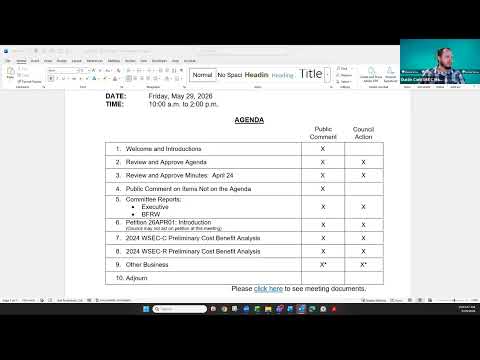
Council staff presented a preliminary residential cost‑benefit analysis and small‑business economic impact assessment and proposed revised filing and hearing dates for the 2024/2027 code cycle; members requested more methodology detail and fuller public posting before formal decisions. The Council approved the updated schedule by voice vote.
Council staff presented a preliminary residential cost‑benefit analysis (CBA) prepared with contractor Morant McLeod and summarized key findings and the structure of the small‑business economic impact statement. Krista, staff lead on the analysis, said the contractor handled the bulk of the primary impacted proposals and noted the preliminary report follows the familiar executive summary, job‑impact, and per‑proposal structure.
Stakeholders pressed for methodological transparency and fuller posting of documents before final action. "I haven't been able to review the actual one because I checked yesterday and it wasn't posted," Patrick Hanks of the Building Industry Association of Washington said, urging more time to examine contractor methods. Questions addressed whether ORIA minor‑cost thresholds were appropriate for affected NAICS categories and whether integrated design effects (for example, equipment downsizing tied to better windows) were included in payback calculations.
Krista and staff said the preliminary material will be posted and that contractors could be asked to brief the economic workgroup on methodology. Public commenter Larry (landrews) urged greater attention to lifecycle replacement assumptions, noting that windows and heat pumps will be replaced multiple times over a 50‑year building life, and called for more transparency.
Staff also presented a revised code‑adoption calendar and filing plan: target CR102 filings for the energy codes on July 1; public hearings August 11 in Olympia and August 14 in Spokane Valley; transcript and comments to be processed in July with targeted final adoption meetings later in August (non‑energy codes) and Sept. 25 (energy codes). Dustin Curb cautioned that emergency filing timelines and publication needs (ICC/IATMO proofs) make the period tight and that December 1 is a statutory deadline that would force a delay if missed.
After discussion about post‑hearing work sessions and publication logistics, Council member Roger Heeringa moved to adopt the proposed schedule; Tom Handy seconded and the motion passed by voice vote. Staff will file the CR102s and post updated calendars and documents to allow stakeholders more time to review the preliminary CBA.