Get Full Government Meeting Transcripts, Videos, & Alerts Forever!
Get email alerts on the Instructional Time Model topic
No spam. Unsubscribe anytime.
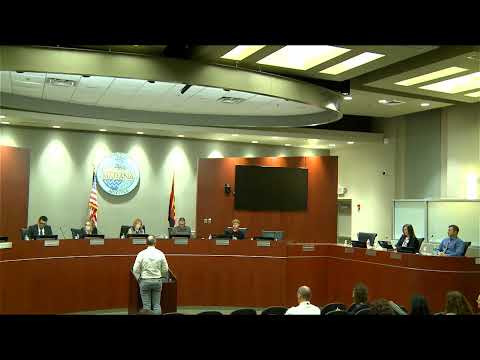
Marana board holds first public hearing on instructional time model to capture funding for flexible students
Summary
MUSD administration presented the first of two public hearings under Arizona law on a proposed instructional time model intended to allow the district to generate state funding for students with nontraditional attendance needs; no action was taken at this meeting.
Marana Unified School District administrators presented the first of two statutorily required public hearings on a proposed instructional time model intended to allow the district to capture average daily membership funding for students who require flexible schedules.
Mr. Bogart, the district presenter, told the board the model would let MUSD collect state revenue for instruction already being delivered to students who do not fit the district’s standard time-and-place schedule. He said the proposal is not a change to curriculum but an optional, case-by-case delivery model for groups such as homebound students, those with long-term illness or suspension, disengaged and transient students, and high school students needing credit recovery. “This is one of our two hearings,” he said, and emphasized the district would use delivery methods that are “tested and rigorous,” including direct instruction, independent learning and mastery‑based approaches.
The presentation cited Arizona Revised Statute 15-901 as the basis for holding two public hearings before adoption and included a draft student contract, a slide deck, and example application responses. Board members were offered the opportunity to ask questions but no formal action was required or taken at this meeting; the administration indicated a second hearing and a full board review would follow before any adoption.
The hearing’s focus was financial and procedural: administration framed the model as a way to mitigate funding losses while preserving instructional rigor and flexibility for eligible students. The district said the Arizona online instruction model is currently limited to 85% of allowable revenue and that the proposed model would help the district align funding with services already provided.
Next steps: administration will hold the second required public hearing and then present a full draft for board review. The item was presented as informational at this meeting and no motion to adopt the model was made.