Get Full Government Meeting Transcripts, Videos, & Alerts Forever!
Get email alerts on the Utility Terms Of Service topic
No spam. Unsubscribe anytime.
Utility board backs updated terms of service; members debate deposits, reconnect fees and collections
Summary
The board approved forwarding a rewritten Chapter 705 (utility terms of service) to council with recommended edits. Key items include a $300 initial deposit framework, revised reconnect/reactivation fees, clarified payment-plan rules, and a plan to send long-unpaid accounts to a collection agency.
The St. James Utility Board voted to forward an updated municipal code chapter governing utility terms of service to the city council after extended debate over deposits, reconnect fees and collections.
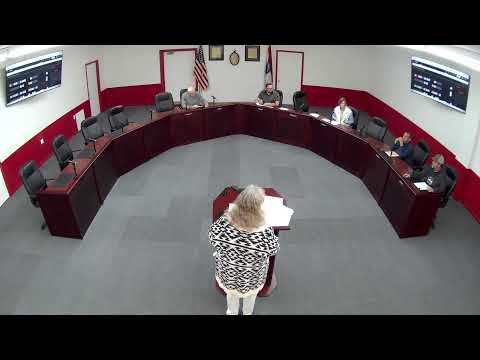
Leanne, a city staff member, presented the draft rewrite that collapses five existing policies into a single Chapter 705 code section and asked the board for recommendations before sending it to council. The draft codifies customer-application requirements, meter-access rules, deposit and refund procedures, late-payment penalties, deactivation/reactivation timing, payment-plan rules, and collections processes.
On deposits, the draft sets an initial residential deposit of $300 and establishes a rule for returning the deposit after a year of on-time payments. Board members questioned the equity and effectiveness of a prior practice that automatically doubled or tripled deposits for chronically delinquent accounts; Leanne said the draft removes the automatic 2x/3x escalation and focuses instead on payment plans, collection referral and other tools. "We're going to take out the two times and the three times," a member said as amendments were discussed.
The board also debated fees for deactivating and reactivating service. The current policy charges $26; the draft splits that into separate deactivation and reactivation fees (each $26) and adds an optional $52 premium fee for same-day activation. Members discussed whether higher reconnect fees or improved outreach would better reduce repeated shutoffs; staff reported roughly 26 recurring shutoffs in recent months and said a collection referral was being planned for about $250,000 in unpaid utility receivables.
Leanne described payment-plan parameters in the draft: customers may use two payment plans every 12 months, and a third plan may be granted only by the utility manager or mayor. She said the city will formalize an internal write-off process for truly uncollectible accounts and will send a list of such accounts to council for resolution. Leanne told the board that collections work will also include optional use of a third-party collection agency and standardizing refund rules for credit balances over $500.
On landlord-tenant transitions, the draft creates a landlord-service contract so property owners may elect to have utilities transferred to the landlord when tenants vacate; the board agreed staff should add a five-business-day notification requirement for landlords to report tenant move-outs to reduce ambiguity about responsibility for outstanding bills.
After amendments and discussion, the board moved, seconded and approved forwarding the revised terms of service to council for formal adoption; the vote was by voice. Leanne said staff will incorporate board edits and present the ordinance language to council on the May 26 meeting agenda.