Get Full Government Meeting Transcripts, Videos, & Alerts Forever!
Get email alerts on the Mount Sinai Environmental Scoping topic
No spam. Unsubscribe anytime.
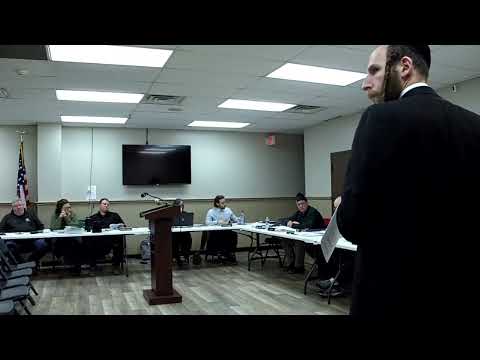
Residents press Fallsburg planning board to study wastewater, water and traffic impacts in Mount Sinai scoping session
Summary
At a Fallsburg planning board scoping session, residents pressed the applicant to expand environmental review of a proposed 109-unit Mount Sinai mobile-home development, focusing on a proposed package wastewater plant, groundwater impacts, summer traffic counts and wildlife-friendly lighting.
The Fallsburg Planning Board’s public scoping session for the proposed Mount Sinai mobile-home development drew detailed environmental concerns from nearby residents, who urged the board to require expanded analysis in the project’s environmental impact statement.
Applicant Joel Cohen described the project as a 109-unit mobile-home community on roughly 58.74 net acres with accessory amenities and an off-site wastewater treatment plant on a separate five-acre parcel. He said because most of the project lies outside the town water/sewer district, the proposal includes on-site wells and a package wastewater plant. "This project is a 109 unit mobile home...there will be on-site wells drilled to provide for water," Cohen said in his presentation.
Residents focused their comments on a handful of recurring concerns. Mary Adams warned that small-scale "package plants" often fail in rural settings and asked the EIS to require long-term maintenance and contingency plans. "Statistics are that one quarter of package plants in rural areas do not work properly," Adams said, urging that any proposal show who will carry replacement and maintenance costs if systems fail.
Neighbors also asked for robust groundwater and pump tests timed during peak summer demand to capture worst-case drawdown. Brett Buddy urged test wells be drilled "in the heat of the summer when all the communities around it are using water," so the EIS reflects peak-season conditions rather than low seasonal demand.
Traffic and cumulative impacts drew repeated attention. Several speakers asked that traffic counts be taken on peak summer Fridays and Sundays and that the study account for other nearby developments, including Woodburn and Timber Ridge. One resident asked that the traffic study analyze turning movements at the Old Route 52/State Route 52 intersection, Old Route 52 and Murphy Road, the two proposed site access roads, and the proposed southside connection to the wastewater treatment plant.
Other topics the public urged the EIS to cover included stormwater/runoff given steep slopes near the Never Sink River, tree inventories and limits-of-disturbance to avoid wholesale clear-cutting, dark-sky compliant lighting with sensor controls to protect local raptors and bats, and emergency vehicle access standards for the internal road layouts.
Planning staff and the applicant said the scoping document already lists many of those topic headings and that the EIS will include appendices with technical studies (soils, hydrology, ecology, cultural resources, traffic and a traffic-impact study). Staff announced written comments would be accepted through the stated deadline and provided a project contact (J Edwards) for submissions and clarification.
The public scoping session closed after the board heard public testimony and staff reminders about next steps; the board will adopt a final scoping document that defines the EIS study list and timelines before the applicant proceeds with the technical studies.