Get Full Government Meeting Transcripts, Videos, & Alerts Forever!
Get email alerts on the Police Constitution topic
No spam. Unsubscribe anytime.
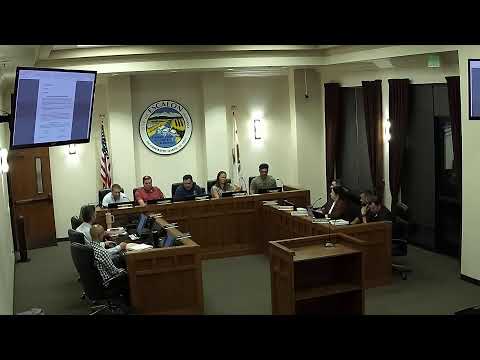
Chief reviews Constitution and policing limits during Escalon council meeting
Summary
The Police Chief gave a public-education presentation on constitutional law and its application to policing—reviewing the Bill of Rights, the 14th Amendment, and key cases such as Graham v. Connor and Terry v. Ohio—and used a local video (7‑Eleven incident) to illustrate the difference between investigation, probable cause, and prosecutorial discretion.
The Escalon Police Chief presented a community-education talk to the City Council on how the U.S. Constitution shapes policing powers and limits. The Chief reviewed the origins of the Constitution and the Bill of Rights, summarized key amendments relevant to law enforcement—particularly the Fourth (search and seizure), Fifth (due process), Sixth (right to counsel), and Fourteenth (equal protection)—and explained how those provisions guide officer conduct and investigations.
The Chief highlighted two Supreme Court decisions widely relied upon in policing practice: Graham v. Connor, which frames the standard for use-of-force and reasonable suspicion thresholds for detention, and Terry v. Ohio, which underpins stop‑and‑frisk authority for officer safety. He emphasized the different burdens: officers look for probable cause to arrest (a higher bar to support charges), while the DA evaluates evidence for prosecution beyond a reasonable doubt.
Using a local news video of two convenience‑store employees restraining and striking an alleged shoplifter as an example, the Chief explained that police investigate, document evidence (including inculpatory and exculpatory factors) and forward cases to the district attorney; the DA decides whether to pursue charges. He described scenarios in which the DA may decline prosecution despite an arrest or referral, such as weak chances of conviction before a jury or when agency action has satisfied the community interest.
Council members commended the presentation as helpful public outreach; no formal action was taken on the presentation. Staff said the presentation and video were intended to educate residents about constitutional constraints on police and typical investigative and prosecutorial roles.