Get Full Government Meeting Transcripts, Videos, & Alerts Forever!
Get email alerts on the Capital Improvements topic
No spam. Unsubscribe anytime.
Indio planning commission finds CIP consistent with city general plan
Summary
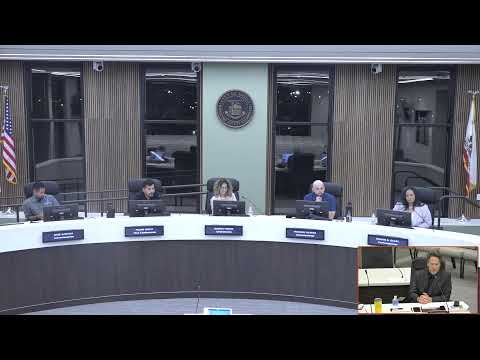
The Indio Planning Commission voted to find the city’s five‑year Capital Improvement Program consistent with the 2040 General Plan after an overview from the city’s principal civil engineer. Commissioners clarified the commission’s role is a consistency finding, not project approval.
The Indio Planning Commission voted May 27 to find the city’s proposed five‑year Capital Improvement Program (CIP) consistent with the 2040 General Plan, a procedural step required by municipal code.
Don Ueno, principal civil engineer for the City of Indio, briefed the commission on 73 projects in the CIP and emphasized major categories: street maintenance and overlays, freeway interchange funding—including allocations for the I‑10 Monroe interchange estimated at $181 million in construction cost—building projects such as a police department headquarters, and water system projects including chromium‑6 remediation. Ueno said the commission was not being asked to approve individual projects but to confirm that the CIP’s priorities align with the general plan.
Commissioners asked clarifying questions about project timing and which improvements would be part of the current fiscal year. A member of the public asked whether Avenue 42 widening was included; staff replied the Avenue 42 work was not funded in FY 2026–27 but remains an identified future project that may be built when storm‑drain work and development timing make it necessary. Ueno noted the city is coordinating with the Coachella Valley Water District on adjacent infrastructure work.
After discussion, Commissioner Slater moved to accept the staff report finding the CIP consistent with the General Plan; the motion was seconded and carried on a roll‑call vote.
The commission’s action is a procedural finding: projects included in the CIP will still require individual approvals or separate funding steps where applicable. Staff noted larger infrastructure projects (for example the Monroe interchange) depend on regional approvals and funding before construction can begin; the CIP entry reflects the city’s budgeting and planning priorities for the coming fiscal years.