Get Full Government Meeting Transcripts, Videos, & Alerts Forever!
Get email alerts on the Zoning topic
No spam. Unsubscribe anytime.
Planning board finds town‑center zoning amendments consistent amid debate over medical‑use language
Summary
The board voted unanimously to find proposed Town Center zone amendments consistent with Verona’s master plan; members raised concerns about undefined exclusions in the 'medical office' definition and whether typical downtown health services should be explicitly permitted or exempted.
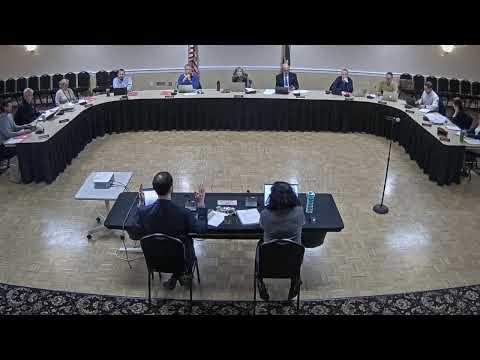
The Verona Planning Board on Feb. 19 voted to find proposed amendments to the Town Center (TC) zoning district not inconsistent with the township master plan, clearing the ordinance to move forward toward council review. The amendments change mixed‑use composition rules — relaxing a strict 50% commercial requirement to allow more conventional two‑over‑one mixed use — add conditional uses and update operational standards intended to revitalize the Bloomfield Avenue corridor.
Board members probed several definition and consistency issues during deliberations. Several speakers noted that the draft’s medical‑office language excludes a list of facility types (urgent care centers, outpatient surgical centers and behavioral‑health clinics) but those exclusions were not defined in the zoning code. Members worried that the change could unintentionally bar traditional downtown health services, like dentists, optometrists and small therapy practices, if not clarified.
A planning staff member said some items are boilerplate required by the state while others are local choices that can be tweaked later. Staff also pointed out existing mechanisms for interpretation — governing‑body guidance and zoning‑board interpretation — if uncertainty arises in enforcement. The board’s attorney and staff noted that small, ministerial definition changes could be made later without rewriting large parts of the code, but recommended any significant edits be coordinated with the governing body.
After discussion, the board moved to find the TC amendments not inconsistent with the master plan; the motion carried unanimously on roll call. Several members asked staff to flag ambiguous definitions and consider recommending precise edits or exemptions to the council before final adoption so long‑standing downtown services are not unintentionally displaced.